
ARUNAVA KHASNOBIS · WRITING
Questions that refuse to leave quietly
Each essay begins with an unfamiliar conflict inside a familiar life—and delivers story, evidence, a serious counterview and one clear lens to carry into your own.
 01
01DOES THIS QUESTION STAY WITH YOU?
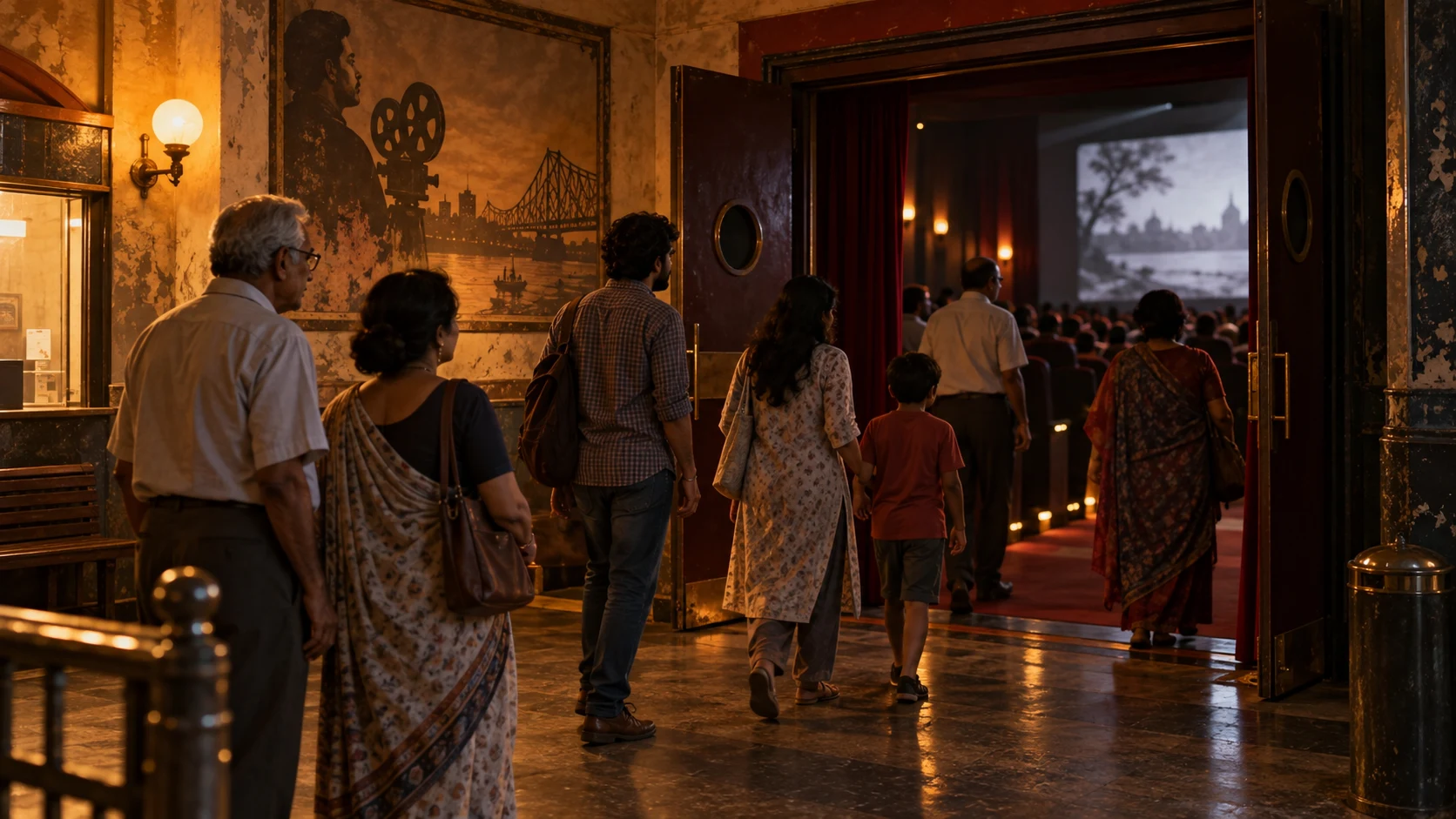
Your Film Failed. What Does Blaming the Audience Stop You Seeing?
Parambrata Chattopadhyay’s conversation opens a practical distinction between protecting your taste and protecting yourself from feedback. A way to examine failed work without insulting its audience or surrendering its ambition.
WHAT STAYS WITH YOUDisagreeing with an audience is not the same as placing that audience beneath you.
 02
02DOES THIS QUESTION STAY WITH YOU?
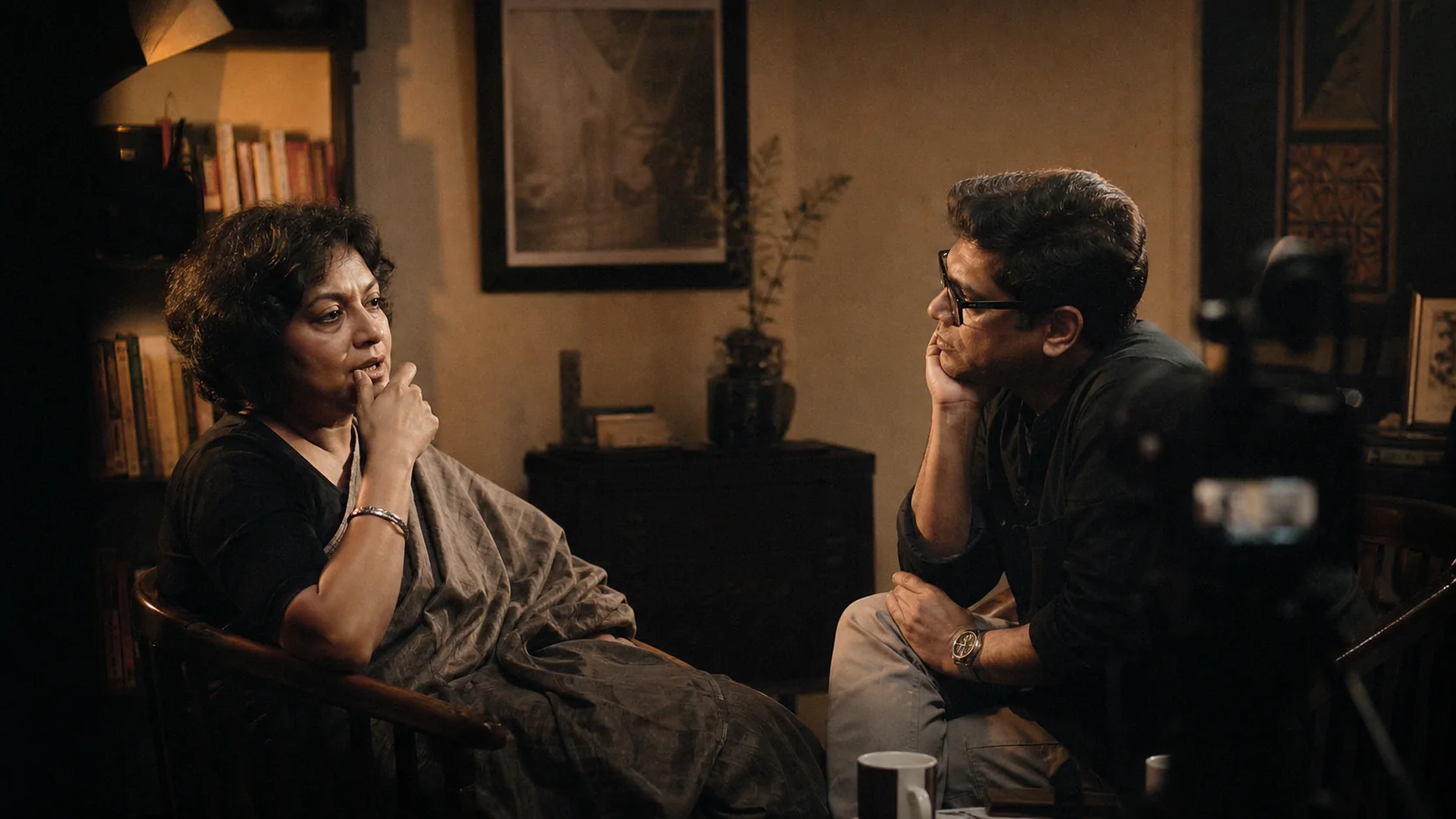
The questions were ready. Why does the real conversation keep escaping?
Indrajit Lahiri’s winding conversation offers a practical lens for preparing deeply without turning a guest into raw material for a predetermined script.
WHAT STAYS WITH YOUPreparation writes the first question. Listening allows an answer to rewrite the next one.
 03
03DOES THIS QUESTION STAY WITH YOU?
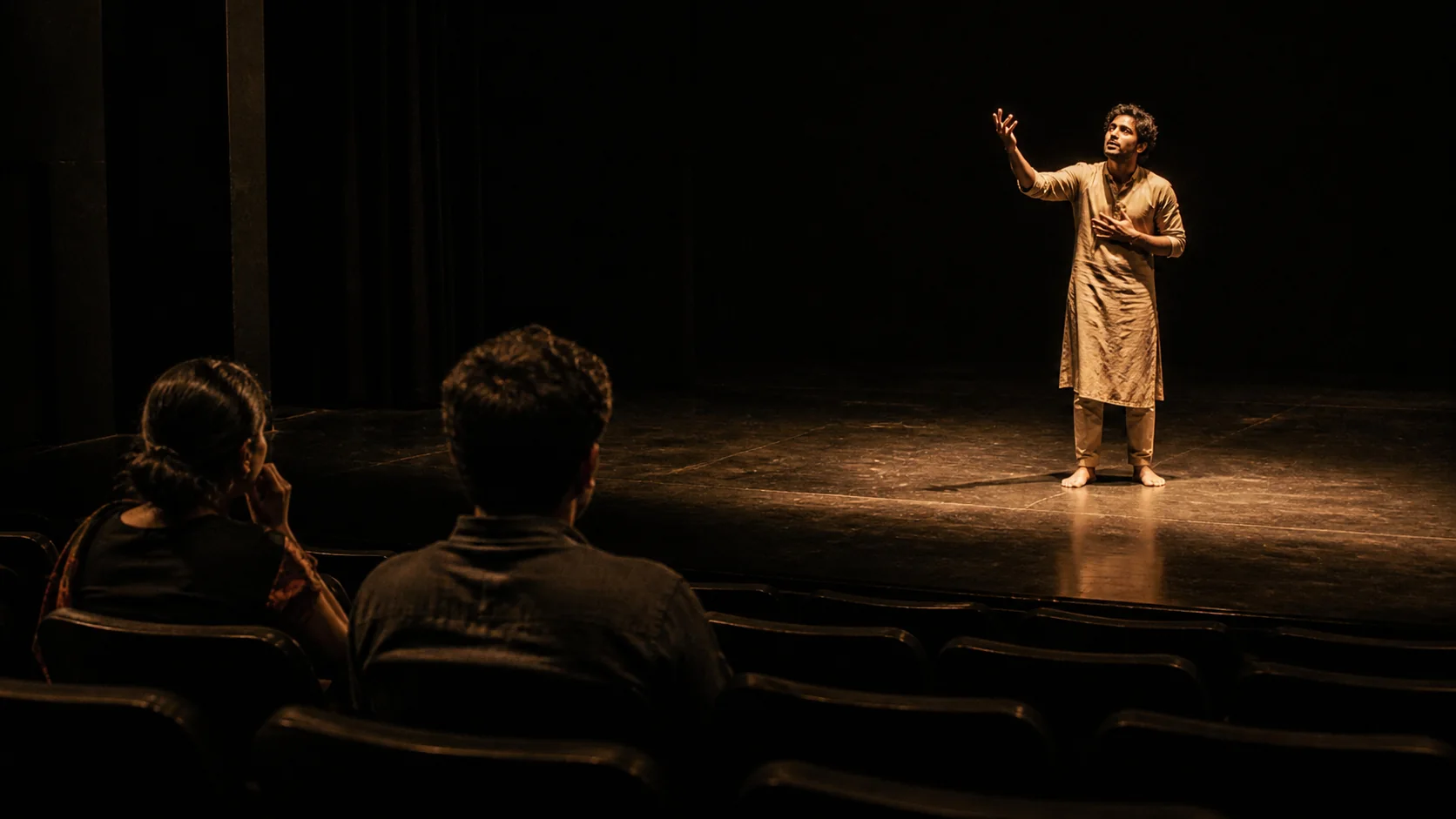
Only two people came. The play still began. What do empty seats reveal about an artist?
Soumya Mukherjee’s near-empty Delhi shows offer a practical way to separate commercial feedback from artistic worth, and motivation from dependable craft.
WHAT STAYS WITH YOUAn empty seat reports something about a production. The two people who did arrive reveal whether the artist can still give the present moment its full attention.
 04
04DOES THIS QUESTION STAY WITH YOU?
His guru said, “Do not copy me.” So how does a student find a voice of his own?
A practical account of learning tradition without becoming an imitation, drawn from Pt. Swapan Chaudhuri’s life as student, accompanist and teacher.
WHAT STAYS WITH YOUImitating the guru may be a first stage of learning. A voice begins to separate when the student acquires the guru’s quality of attention and then makes an independent musical decision.
 05
05DOES THIS QUESTION STAY WITH YOU?
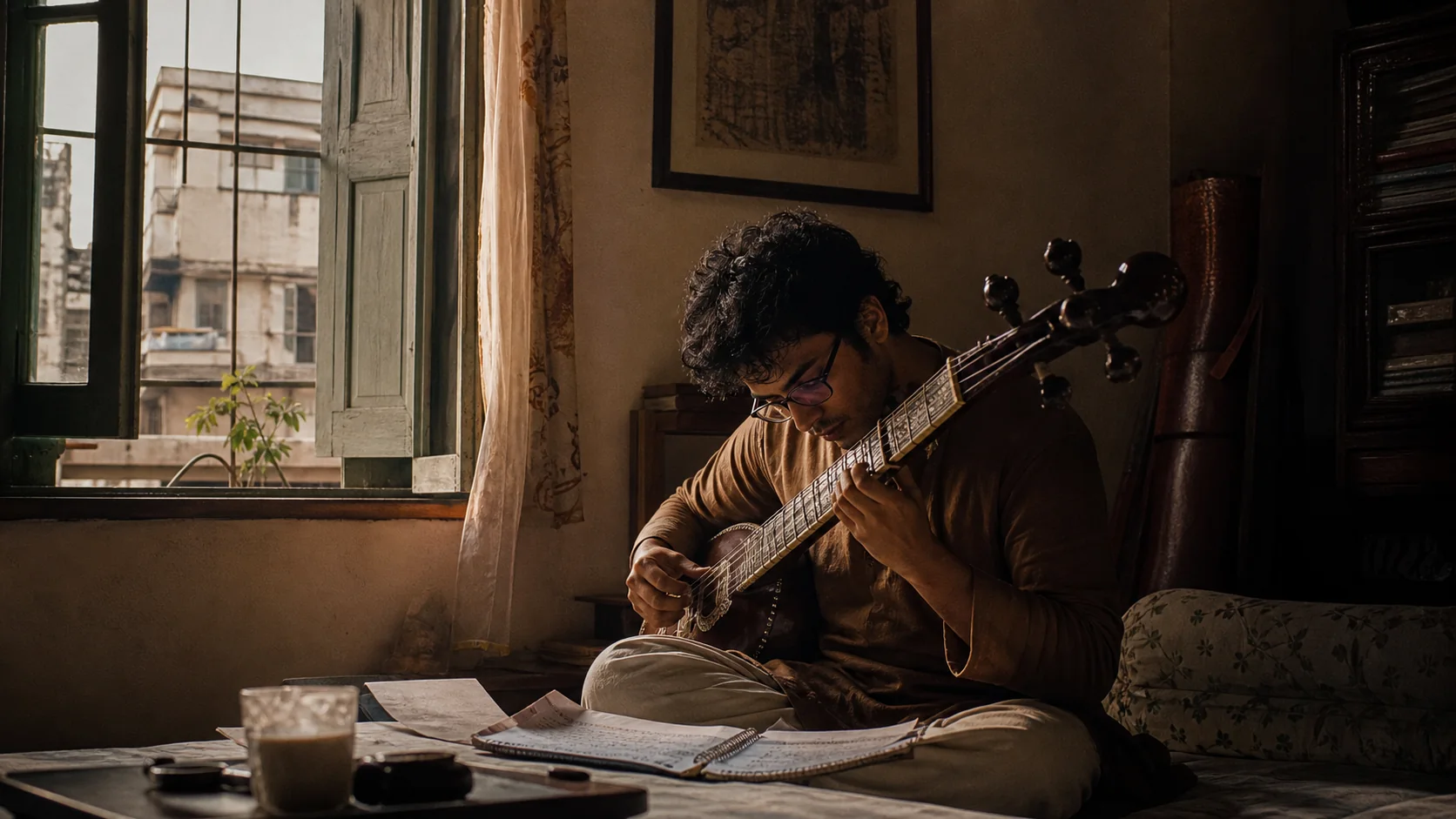
The world heard mastery. She still heard one wrong note. When is an artist finished?
A practical lens for using dissatisfaction to deepen craft without letting perfectionism consume the artist, drawn from Haimanti Sukla’s life in music.
WHAT STAYS WITH YOUWhen everyone praises the performance but the artist still hears a fault, the discomfort is not proof of failure. Used precisely, it becomes an instruction for the next day.
 06
06DOES THIS QUESTION STAY WITH YOU?
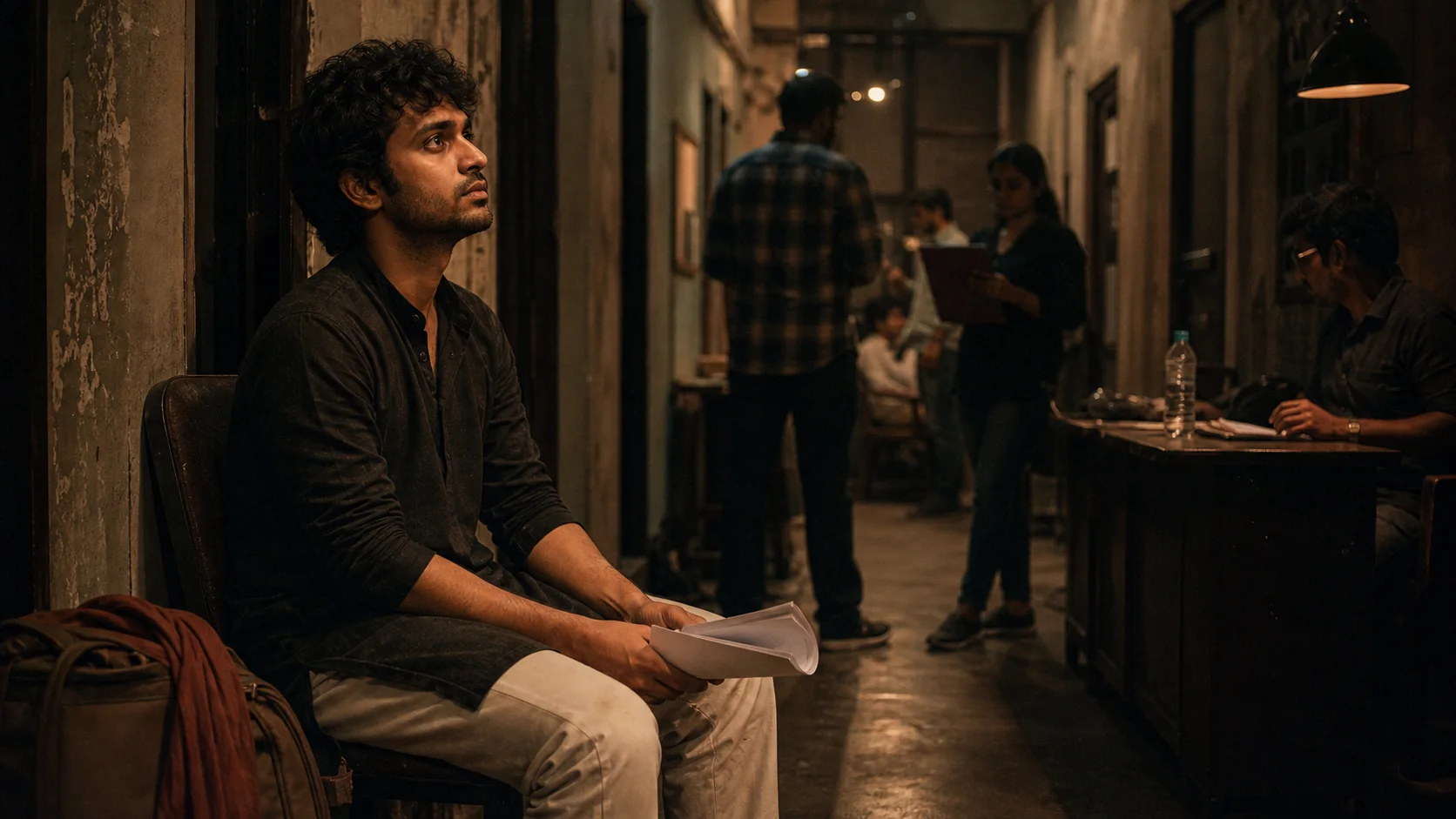
Everyone praised the performance. Then the phone stopped ringing. What does an artist protect?
A practical way to separate craft, self-respect and market approval when good work does not lead to the next job.
WHAT STAYS WITH YOUWhen work disappears, the artist does not need a motivational fiction. The first protection is a clean distinction between craft, market access and personal worth.
 07
07DOES THIS QUESTION STAY WITH YOU?
When every mistake becomes a verdict, what happens to a child’s curiosity?
A practical lens for separating guidance from constant judgment, so that children can learn from mistakes without learning to distrust their own minds.
WHAT STAYS WITH YOUA child can survive a wrong answer. What is harder to recover from is the belief that every answer reveals something defective about the person giving it.
 08
08DOES THIS QUESTION STAY WITH YOU?
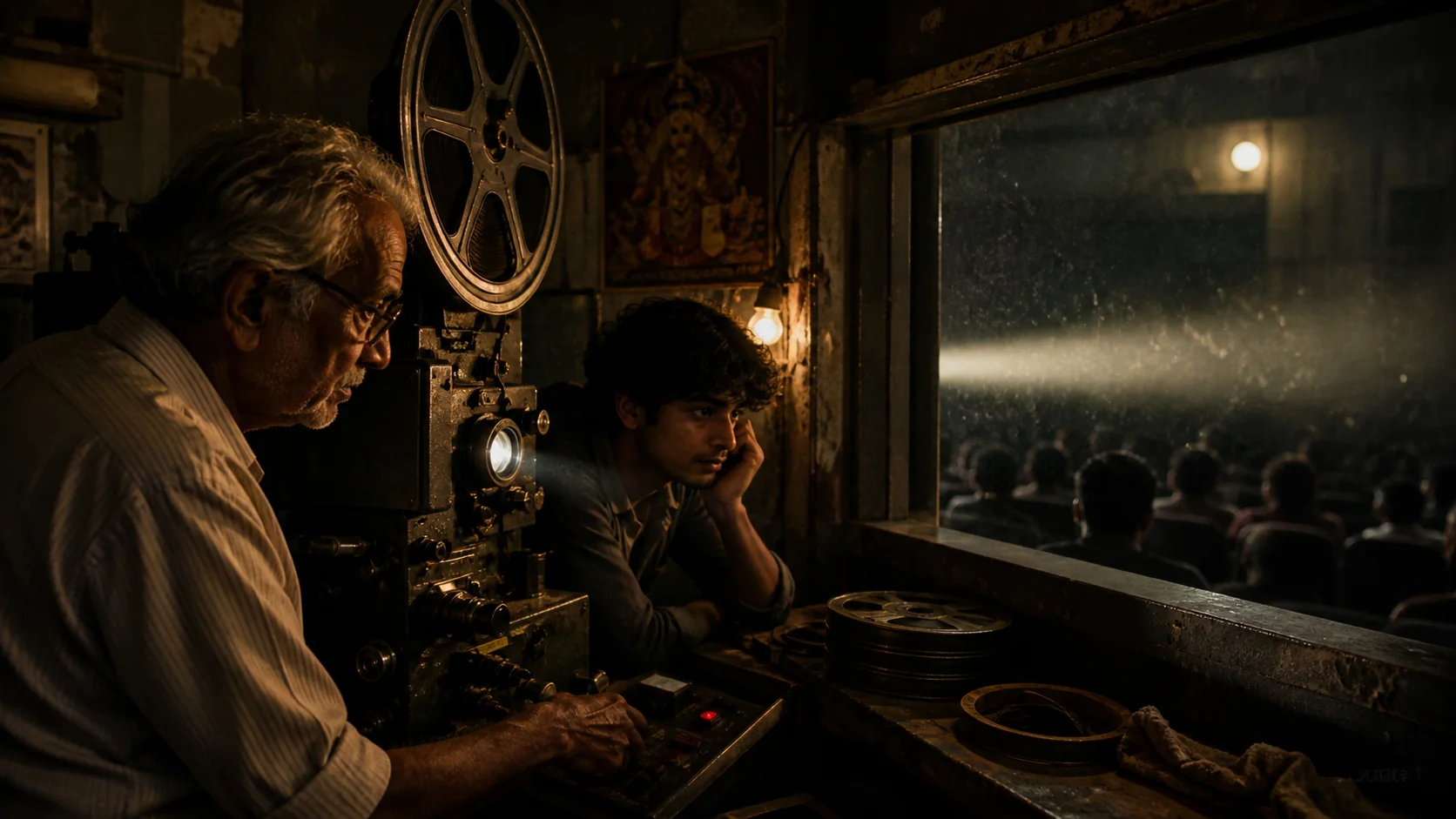
Is Bengali cinema dying, or has it stopped speaking to its audience?
A diagnostic lens for separating nostalgia from the real pressures of craft, exhibition, pricing, distribution, memory and a radically changed screen culture.
WHAT STAYS WITH YOUDeclaring a cinema dead is easy; the harder task is finding which door between a story and its audience closed first.
 09
09DOES THIS QUESTION STAY WITH YOU?
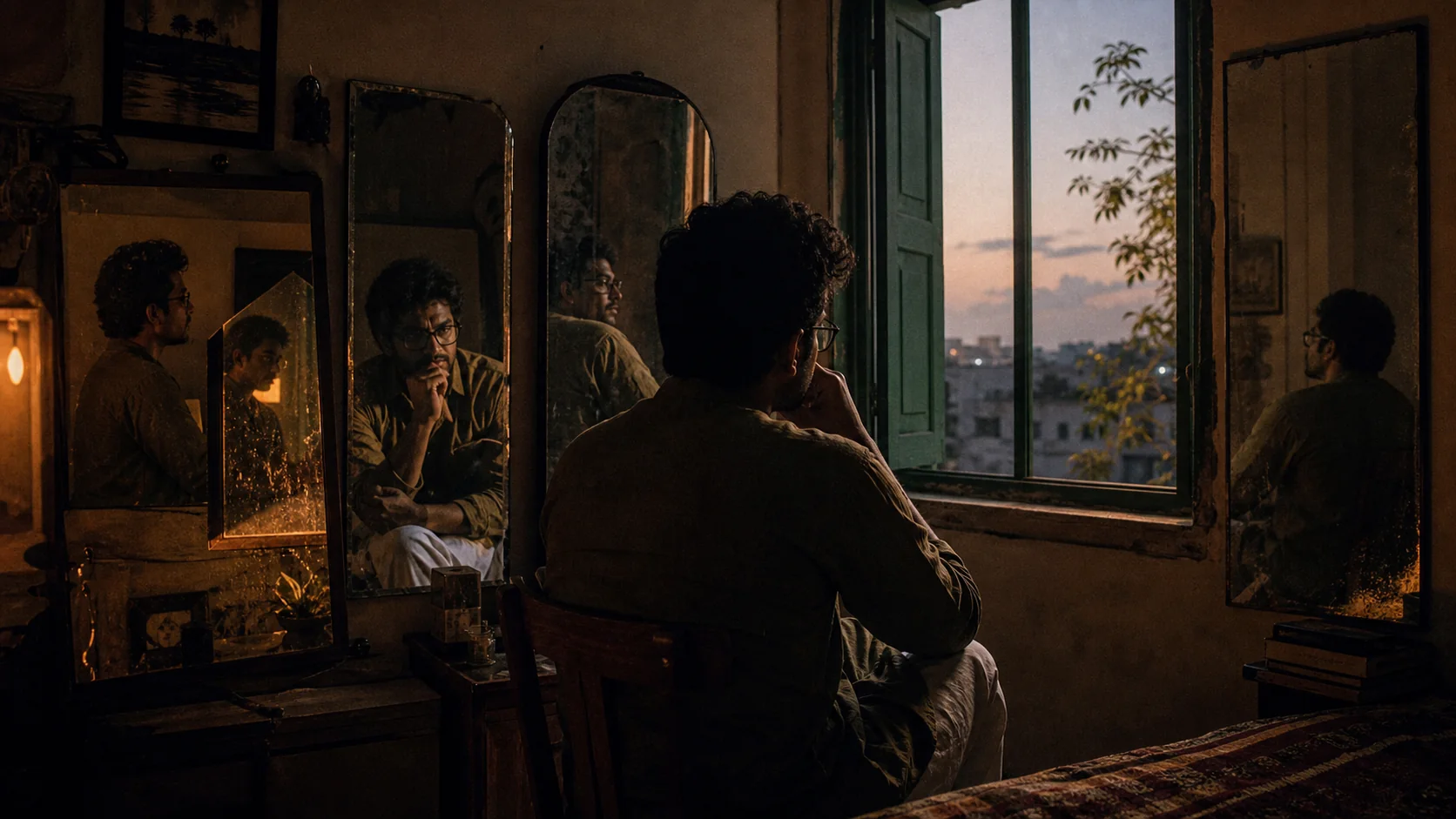
Can three quiet words—“This is who I am”—stop a life from changing?
A practical way to tell when identity is giving you continuity, when it is becoming an alibi, and how to make room for change without erasing yourself.
WHAT STAYS WITH YOUIdentity is a room. The danger is not having one; it is mistaking a room with sealed windows for the whole world.
 10
10DOES THIS QUESTION STAY WITH YOU?
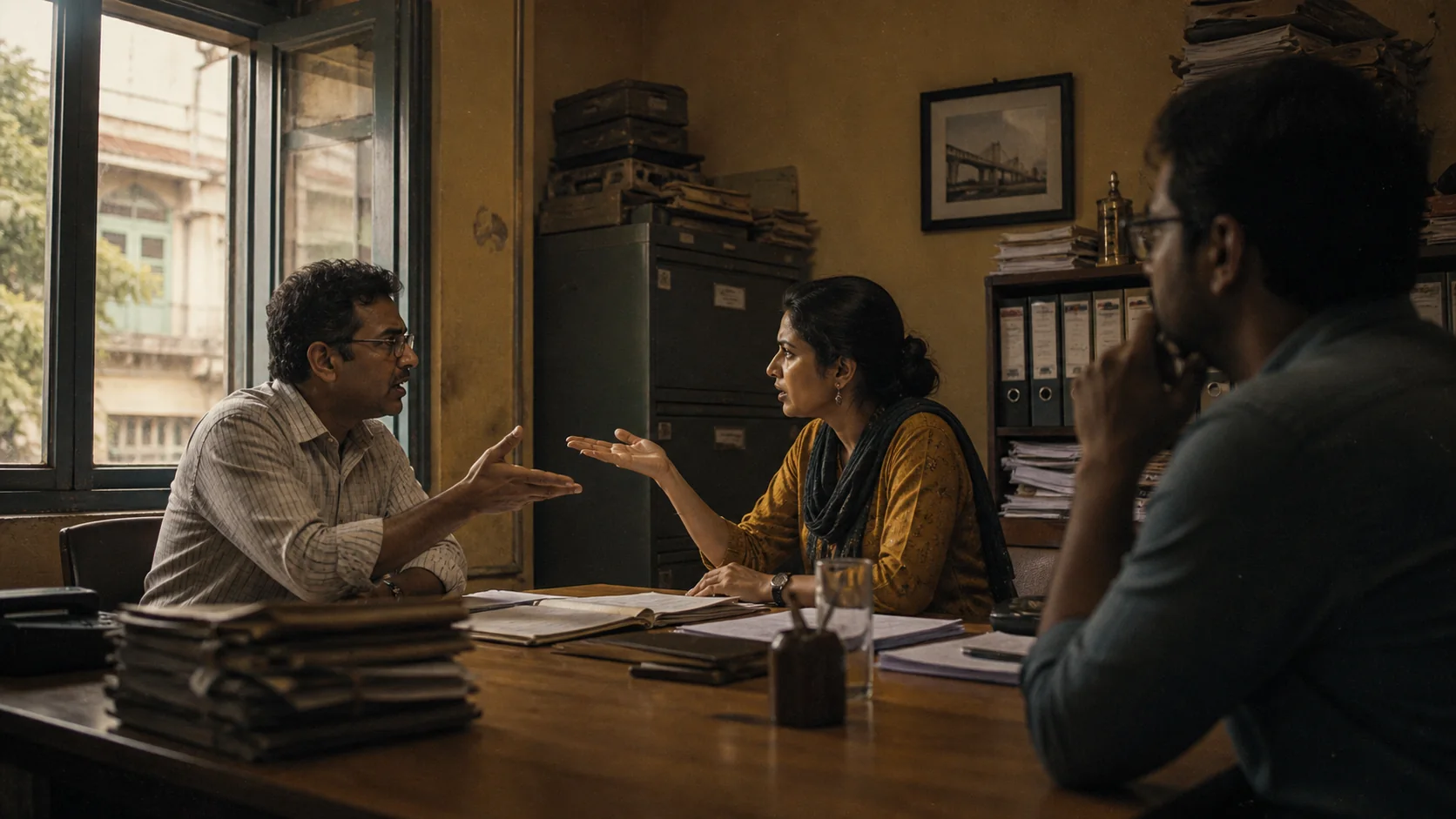
Silence at work is not always maturity: when to manage the ego and when to resist
After a bruising meeting, are you reacting from wounded pride—or teaching yourself to tolerate unequal power? A practical way to separate emotion, evidence and responsibility.
WHAT STAYS WITH YOUA pause is not meant to silence you; it is meant to stop fear, wounded pride or power from writing your next sentence alone.
 11
11DOES THIS QUESTION STAY WITH YOU?
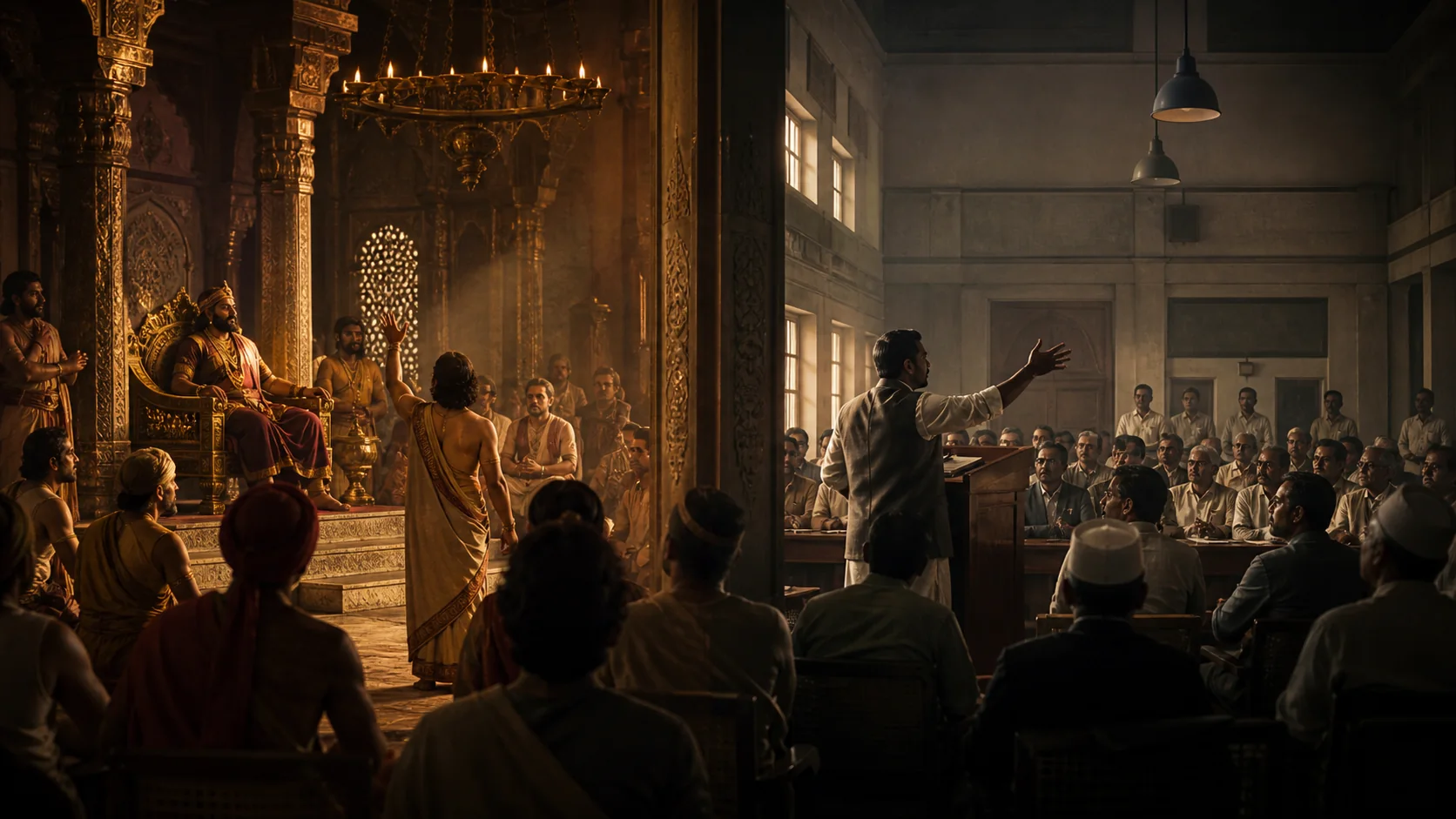
Why do we search for a Duryodhana in every political conflict?
Calling one leader Duryodhana and another Krishna makes politics easy—and stops civic judgment. When does epic analogy illuminate, and when does it become propaganda?
WHAT STAYS WITH YOUAn epic can give politics a language of questions; once it is allowed to answer for living citizens, democracy returns to the property of storybook kings.
 12
12DOES THIS QUESTION STAY WITH YOU?
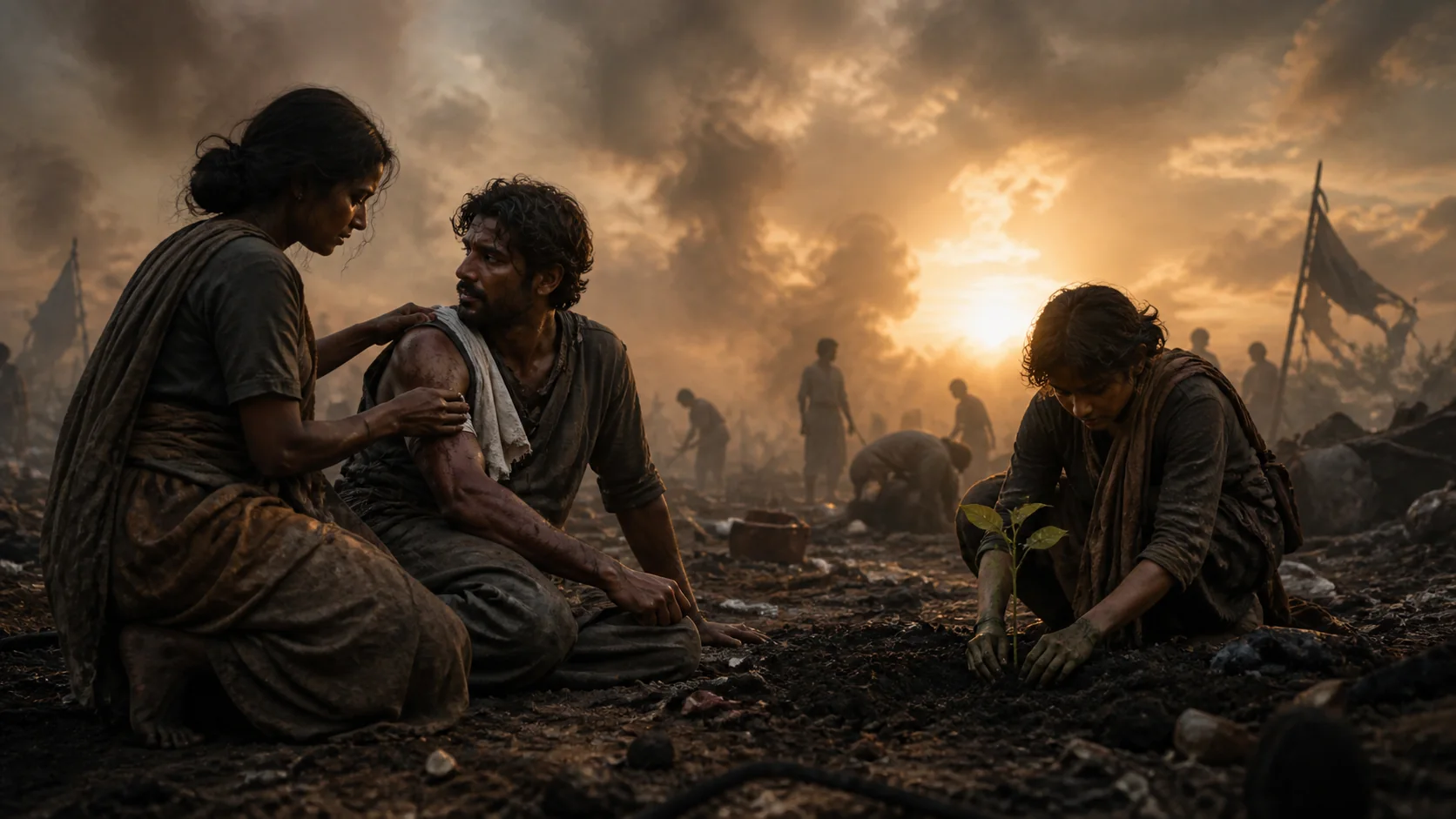
Why can no one simply go home after winning a war?
The weapons are silent, but the war remains inside bodies, families and memory. A map of grief, guilt and repair after victory.
WHAT STAYS WITH YOUHope is not always light; sometimes it is enough ground for the next just step in the dark.
 13
13DOES THIS QUESTION STAY WITH YOU?
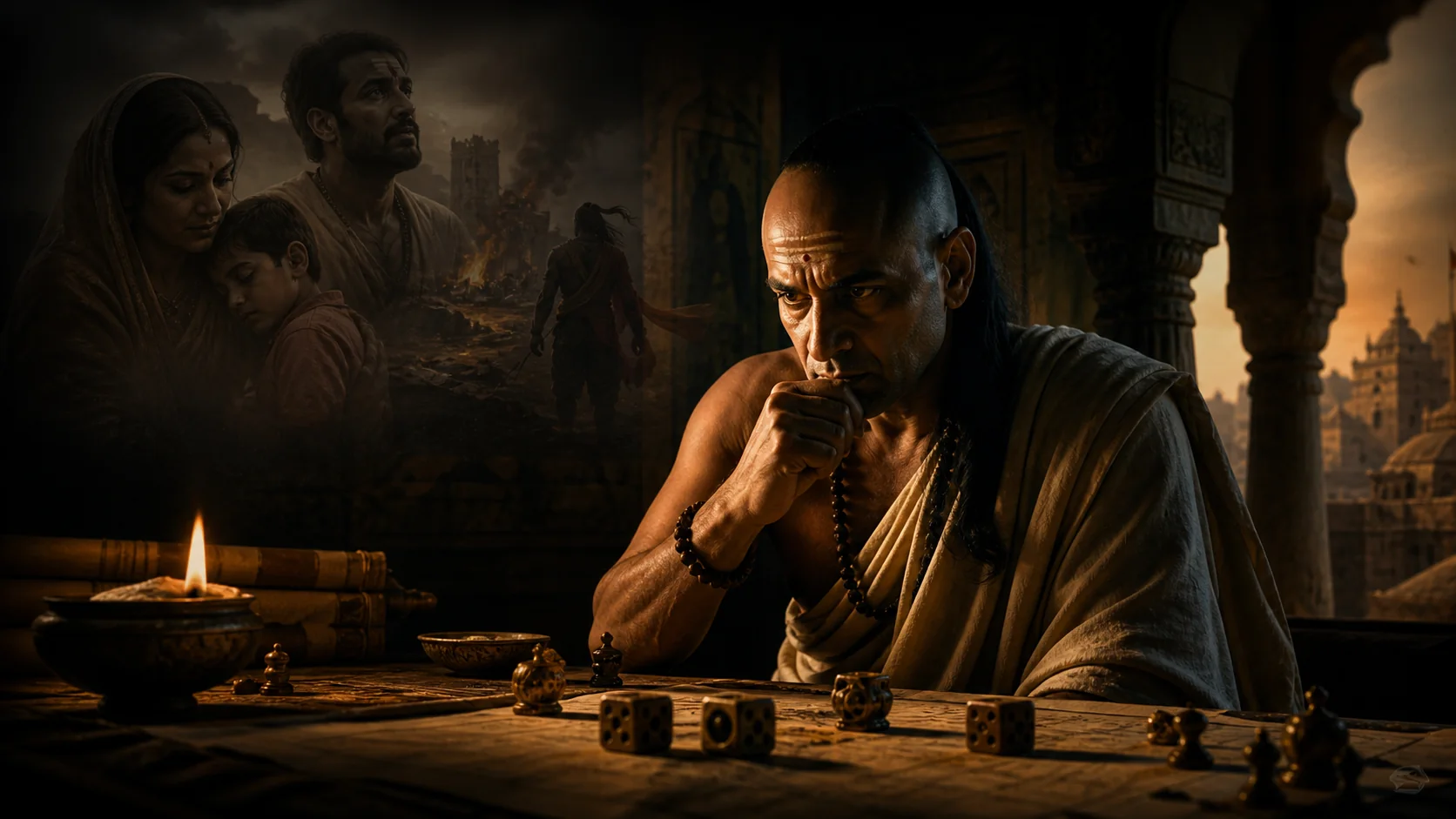
Shakuni’s most dangerous weapon was not the dice
He did not create the wound; he gave it a plan, an enemy and a shortcut. How manipulation shrinks agency—and how an entire court helps it succeed.
WHAT STAYS WITH YOUA wound may sharpen intelligence; when intelligence serves only the wound, it begins to cut the future.
 14
14DOES THIS QUESTION STAY WITH YOU?
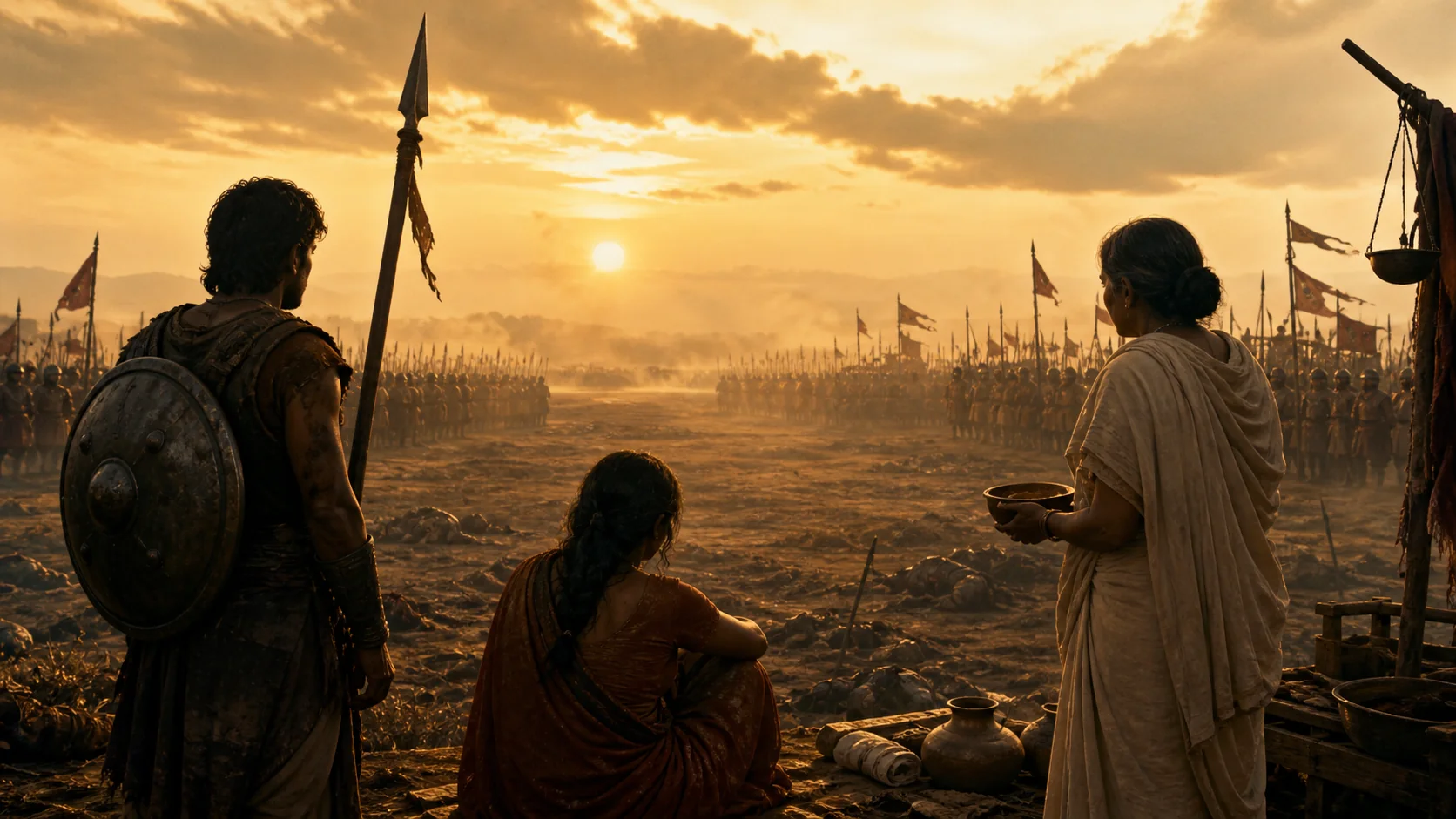
If the war is just, why does it require so much injustice?
Kurukshetra contains a claim to justice—and broken rules, revenge and invisible deaths. Does a just cause make every method sacred?
WHAT STAYS WITH YOUA just cause does not lower the standard of conduct; it raises the burden of restraint.
 15
15DOES THIS QUESTION STAY WITH YOU?
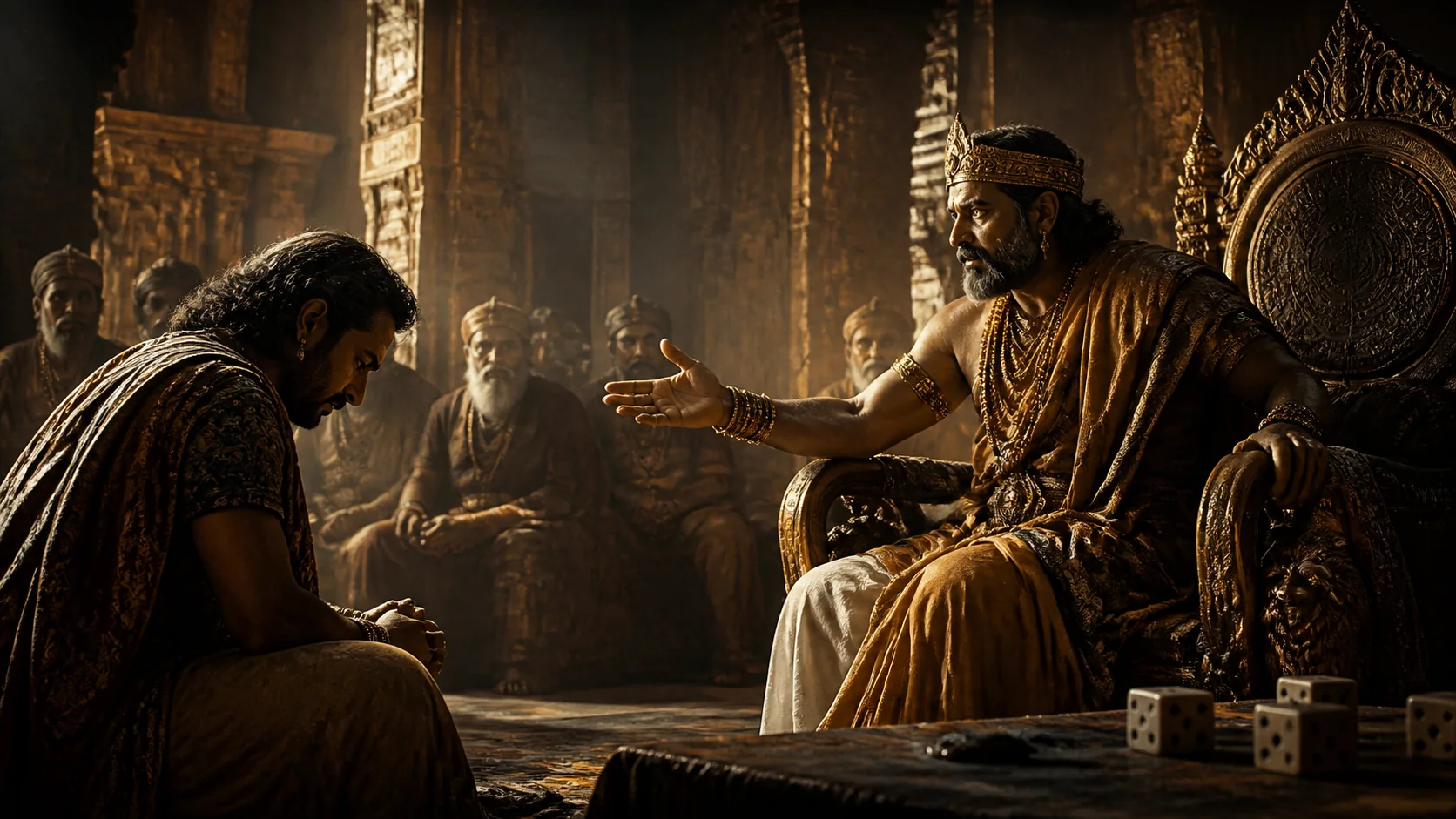
Can the truth still be unjust? Yudhishthira’s most uncomfortable lesson
A sentence can be technically true and still destroy a person. From the dice hall to Drona’s death, what does truth lose without context, power and consequence?
WHAT STAYS WITH YOUTruth is not only the accuracy of a sentence; the life altered after that sentence belongs to its moral meaning.
 16
16DOES THIS QUESTION STAY WITH YOU?
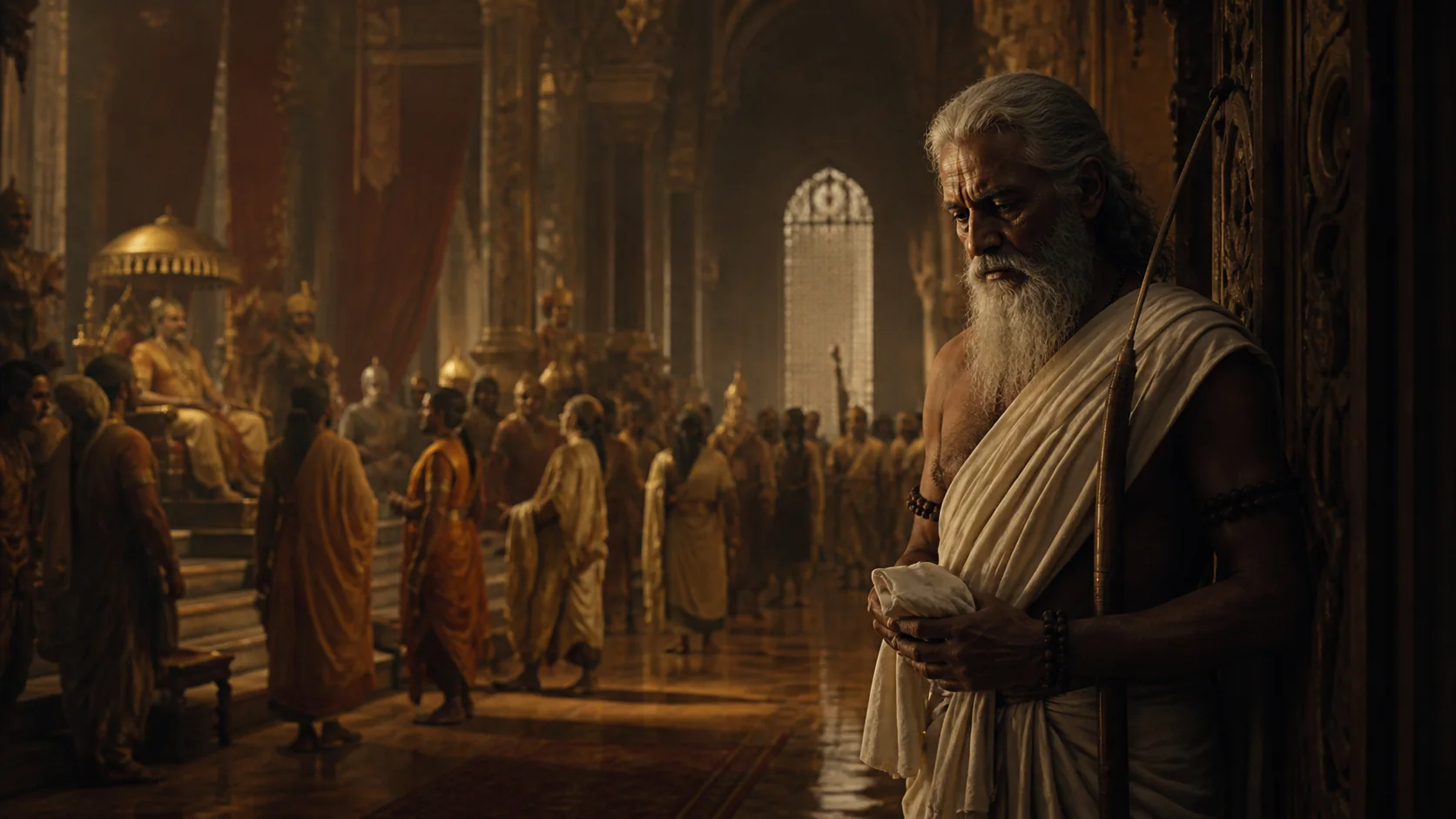
Was Bhishma truly great? How one vow silenced generations
We admire one man’s self-control. But what happens when generations pay for his vow? A reading of family, institutions and the dangerous comfort of loyalty.
WHAT STAYS WITH YOUA vow is not noble because it never changes; it is noble only while it remains answerable to the life it was meant to protect.