Soul Connection · Cinema · Taste · Audience
Your Film Failed. What Does Blaming the Audience Stop You Seeing?
Parambrata Chattopadhyay’s conversation opens a practical distinction between protecting your taste and protecting yourself from feedback. A way to examine failed work without insulting its audience or surrendering its ambition.
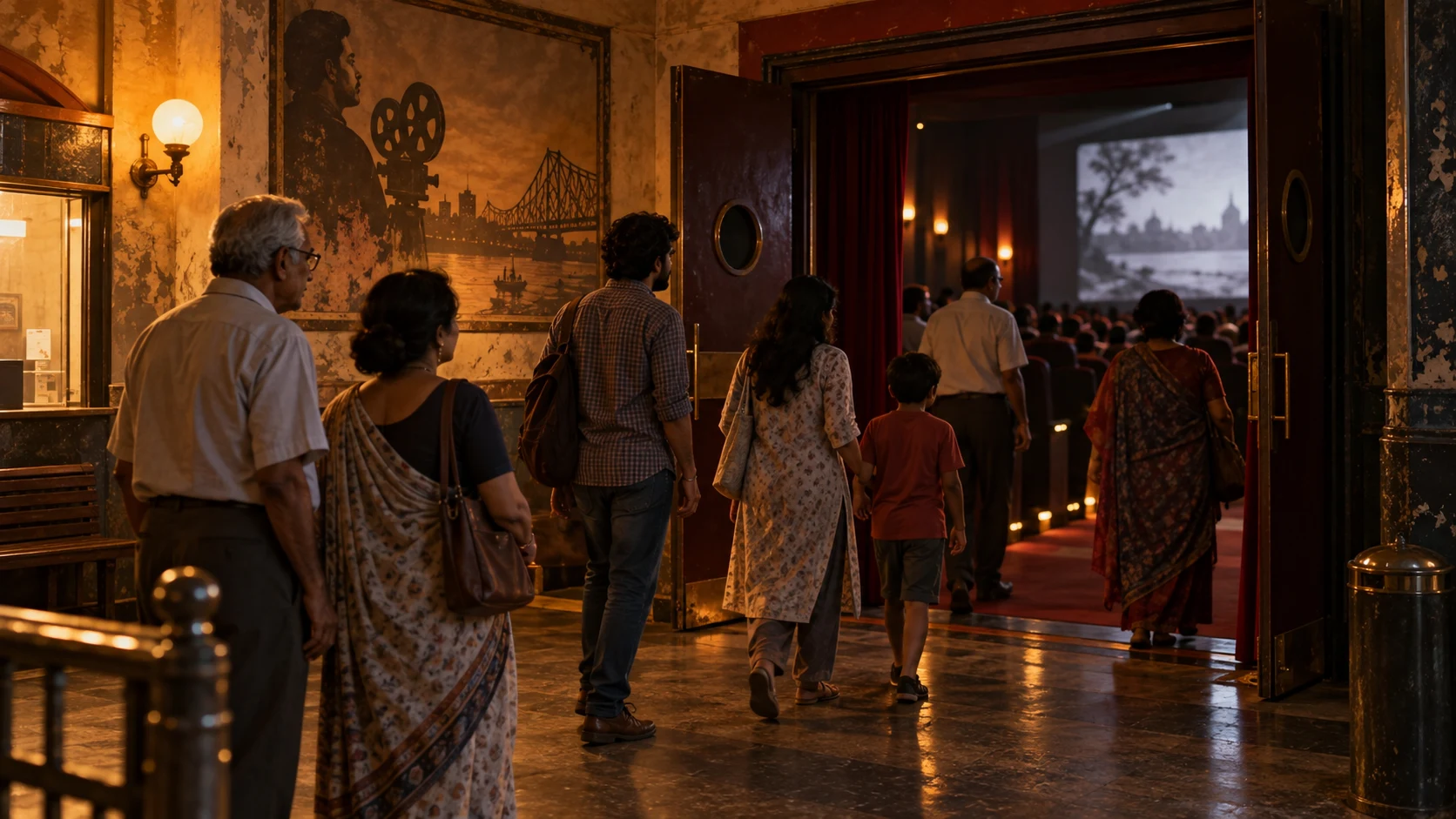
After the empty seats, who gets the blame?
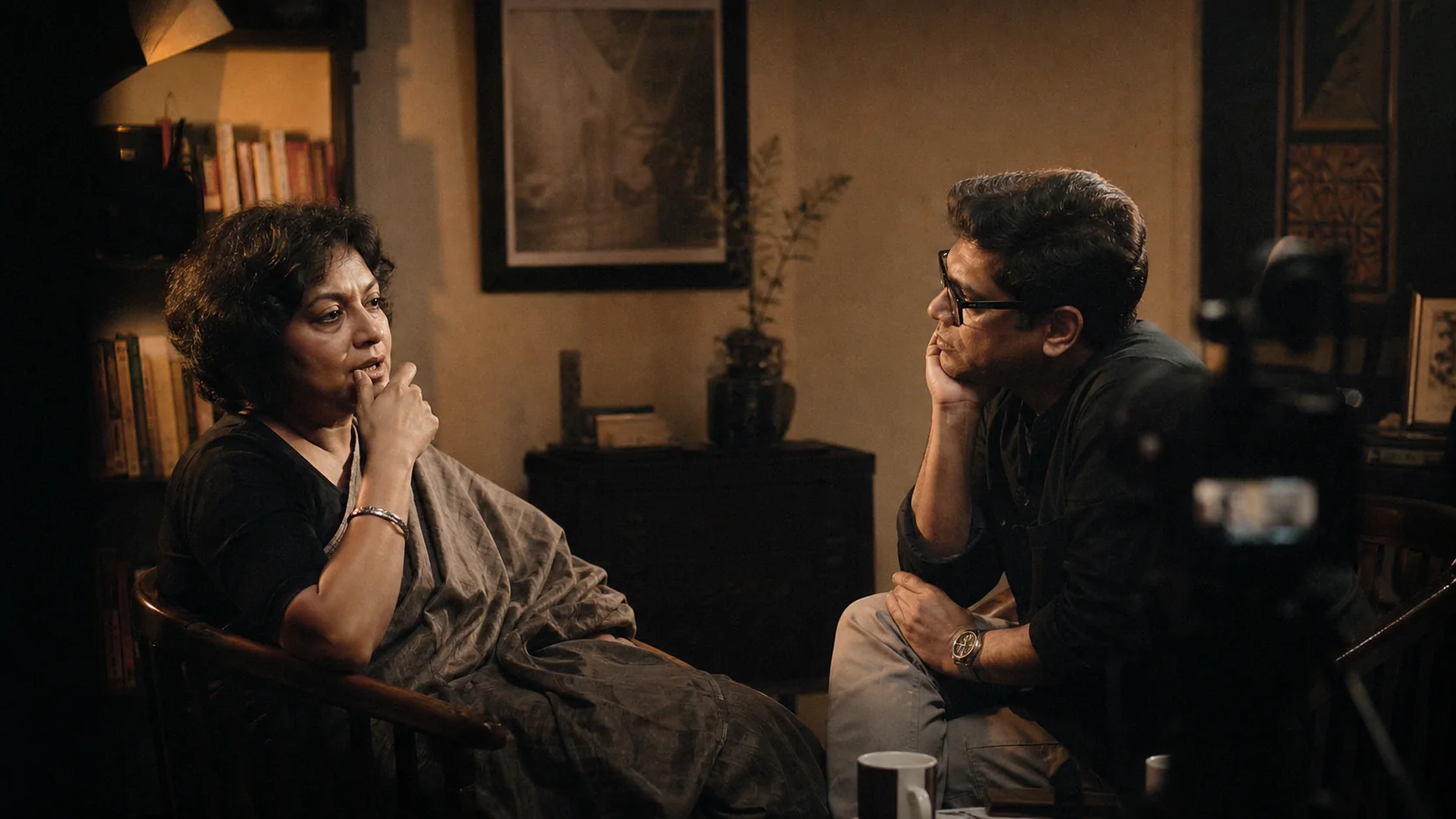
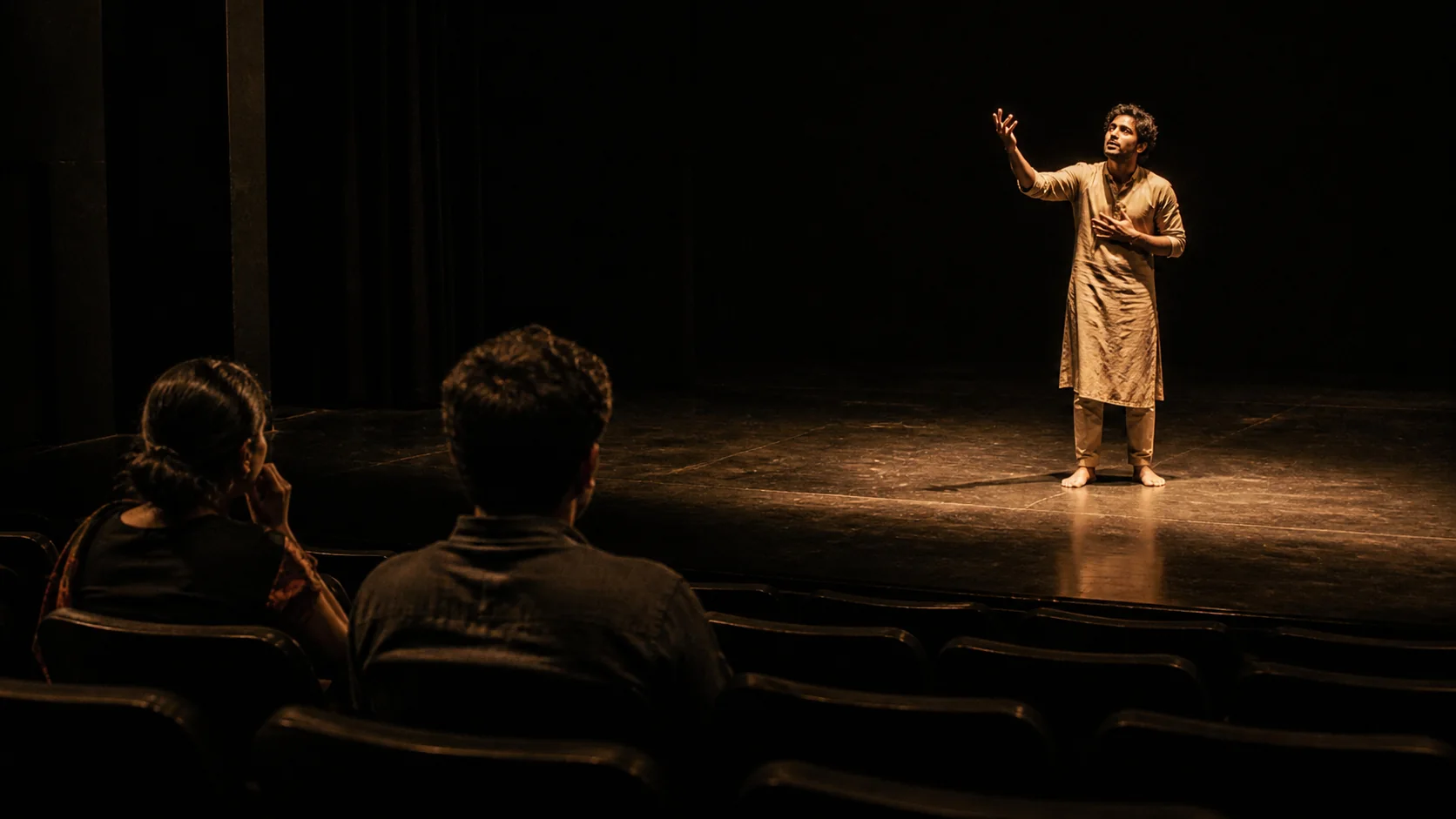
An expensive, carefully made film fails to connect. The director can begin with its scenes, or begin with the people who stayed away. One route is uncomfortable; the other can be reassuring. In his Soul Connection conversation, Parambrata Chattopadhyay takes the uncomfortable route when discussing Lorai. He accepts that something in his telling failed. The audience did not owe him understanding simply because the work mattered to him. That admission does not settle the film’s history. It changes where the next question can go.
The useful question is not whether an artist should surrender to popular taste. Parambrata’s other examples resist that conclusion. He offers a different reading of Boudi Canteen’s theatrical response and its later reception, and he defends the complex approach he chose for Abhijaan. What emerges is a more demanding distinction: which difficulty belongs to the subject, which belongs to a failure of craft, and which belongs to the artist’s need to remain unquestionably right? This essay follows that distinction, treating his accounts as the filmmaker’s retrospective interpretations, not as an independently established explanation of an entire industry. In a separate Prothom Alo interview, he similarly places responsibility on makers to offer meaningful alternatives rather than blame viewers for established preferences. That interview corroborates this broader position; it is not evidence for every explanation he gives in this episode.
Separate the questions before choosing the culprit
Did the scene deliver the experience the film promised?
Who found it, when, and with what expectation?
Are you examining the response or disqualifying the person who gave it?
The genre was not the only thing being judged
The conversation begins with Nikosh Chhaya and horror. Parambrata asks why creators have not paid closer attention to what people already read and listen to. His observation leads to a question about status: for some educated urban viewers and makers, admitting a taste for horror can feel like admitting a lesser taste. The proposed work is judged before its storytelling is examined. Does this fit the identity I want others to recognise? That question quietly replaces the more useful one: what relationship could this particular story create?
Horror need not be defended through belief in ghosts. Suspense, an unfamiliar sound in a familiar room, or the sudden uncertainty of a trusted place can create a meaningful experience. We can criticise a film for cheap shocks, careless writing or an unearned resolution. Those are judgments about what it does. Dismissing the entire genre as beneath serious people does something else. It allocates dignity to certain pleasures and withholds it from others. The argument is no longer about the scene; it is about who is allowed to enjoy it without losing standing.
A small private test can reveal the difference. Think of a popular film you enjoyed but felt embarrassed to defend in front of friends. Then think of a prestigious film you struggled with but felt obliged to praise. In both cases, the reported experience has been edited to protect an identity. This does not make popular work inherently better, or demanding work inherently fraudulent. It means the conversation has acquired a hidden purpose. We are arranging how we will be seen instead of describing what we saw.
There is an opposite trap here too. Popularity does not relieve a work of scrutiny. Familiar emotional cues can be used lazily, and a reliable reaction can become a substitute for discovery. The practical lesson is not to make audience pleasure the final authority. It is to stop making that pleasure disreputable before the discussion begins. Once it is allowed into the room, we can ask a specific question about the work: did it deepen the experience, or merely repeat the easiest way of producing a response?

Change did not have to mean eviction
Coexistence is the word Parambrata returns to when discussing changes in Bengali cinema. In his reading, a repetitive commercial idiom needed alternatives. Other sensibilities deserved space. The mistake was not wanting change; it was allowing the new space to imply that earlier forms and their audiences no longer deserved a place. He includes himself in this criticism. His account is useful because it does not divide the industry into enlightened reformers and people who failed to understand them.
He also offers a wider interpretation involving urban stories, viewers outside Kolkata and the way remakes were made. This is a filmmaker looking back, not a sufficient causal history of declining attendance. Exhibition, finance, distribution, promotion and viewing habits would need their own investigation. Still, his reading can expose an editorial blind spot. When a new taste becomes dominant, what happens to the people whose pleasures were previously recognised? A work may challenge their expectations without treating their existence as an obstacle to progress.
That question travels beyond film. Imagine a workplace introducing a genuinely better method. The new team correctly identifies the old method’s weaknesses, but communicates the change by making its users feel stupid. Resistance may now include the experience of humiliation, not simply ignorance. A publication changing its language or a classroom changing its approach can make the same mistake. There is a difference between asking someone to discover a new possibility and requiring them to renounce the person they were before being admitted.
Coexistence is not an agreement that every work has equal merit. It leaves room for different encounters while allowing exact criticism. A difficult film can alter a viewer’s habits; a familiar story can provide a different pleasure after an exhausting day. Each can fail at its own purpose. The problem begins when the existence of one is used to invalidate the need for the other. A culture of judgment should help us distinguish works, not shrink the available world until only our own preferred room remains open.
Is the story difficult, or is the director displaying difficulty?
On content and form, Parambrata proposes that the story’s needs should guide its telling. Fragmenting the chronology of an otherwise straightforward story will not automatically make it richer. A complicated experience may, however, require something other than a straight line. His distinction asks where the difficulty came from. Did the subject require it, or did the maker need the work to announce his sophistication? We should not assume that the answer can be read from the number of cuts or the order of scenes alone.
Consider an imagined scene: someone leaves a house while another person stands at the door, unable to stop them. A held silence might allow the separation to arrive. Adding flashbacks, a rapid montage and emphatic music might instead announce the feeling before a viewer has had room to discover it. Form is not simply decoration applied to an already complete meaning. It determines what a viewer can notice, what remains uncertain and how much participation the encounter permits.
The objection matters. Difficulty can be necessary, and unfamiliar work may take time to meet its audience. Some films deliberately challenge established habits rather than offer easy access. Parambrata distinguishes experiments with the medium from work primarily concerned with telling stories. His broad remarks on experimental cinema need not be accepted as a final definition for that distinction to remain useful. Before calling a work accessible or obscure, ask what kind of encounter it intended and whether its choices serve that encounter.
After a failed response, then, two inquiries are needed. Has a necessary difficulty asked viewers to see differently? Or have the maker’s choices left essential relationships, information or emotional movement unavailable? The first may call for a different introduction and more time. The second calls for work on craft. If both are covered by the same accusation that people cannot understand, the director loses a way to distinguish an artistic risk from an avoidable weakness. That is the useful question blame prevents us from asking.
The portrait that could not become a tribute
Abhijaan makes the argument harder precisely where it needs to become harder. Parambrata describes Soumitra Chattopadhyay as a person of internal contradictions, not a collection of admirable achievements. His stated intention was to approach that complicated person rather than turn the film into an act of worship. He says that, even if he made it again, the subject would not allow him to adopt a substantially more straightforward, broadly appealing approach. The difficulty, in his account, was not something attached to the film to make its director look serious. It belonged to the person he was trying to portray.
Respecting an audience therefore cannot mean satisfying every expectation. A viewer may want a reassuring tribute; the work may need to preserve an uncomfortable contradiction. A director can stand by that choice while continuing to examine whether the viewer was given a route into it. Fidelity to a subject does not excuse weak scenes. Nor does a small audience prove fidelity. The same caution applies to Boudi Canteen: Parambrata’s interpretation of release timing opens a plausible line of inquiry, but later appreciation alone cannot establish timing as the only cause. Accountability is useful when it identifies what could be controlled and what still needs evidence. It becomes another performance when the artist either claims complete innocence or takes the blame for absolutely everything. Neither response helps locate the problem.
Leave a chair beside your certainty
For the next film, essay, presentation or video, try an audience encounter that does not begin with your explanation. Invite a few people outside the circle that already understands your intentions. Ask where attention weakened, which relationship remained unclear, and what they expected when they began. Resist correcting their account immediately. Once you explain the scene, you are testing your explanation as well as the work. Record three different things afterwards: what the work could change, how it needs to reach its intended audience, and which disagreement you will accept without changing it. The third column protects ambition; the first protects you from confusing ambition with immunity.
Late in the episode, Parambrata offers a personal explanation of behaviour others perceived as arrogance: social awkwardness and a defensive attempt to protect himself in an unfamiliar professional world. That account should not excuse every effect of class distance, but it warns against believing that a visible manner tells the whole story. Intention and impact can differ. Leave a chair beside your certainty for someone whose taste does not match yours. If that person dislikes the work, can the conversation reveal something you had missed? Or must you make the person inadequate before you can feel safe? The film need not change on command. But if it was made to meet other people, their difference cannot simply be treated as a defect in the meeting.
Specific takeaways
- 01
After disappointing feedback, examine a particular scene or passage before making a claim about the audience’s taste.
- 02
Criticise a popular genre through its craft rather than the social standing of people who enjoy it.
- 03
When introducing a new idiom, identify the route by which an unfamiliar viewer can enter it.
- 04
Name what each major formal choice changes: chronology, silence and music need reasons beyond demonstrating skill.
- 05
Investigate the work, its availability and its release circumstances separately instead of choosing one convenient culprit.
- 06
Collect the first response before explaining your intentions, so you can hear what the work communicated on its own.
- 07
Write specific reasons both for accepting a change and for preserving a choice despite disagreement.
Questions for your own life
- Which work did you enjoy but feel embarrassed to defend, and whose judgment were you protecting yourself from?
- In your last explanation of failure, which specific decision disappeared behind a claim about other people?
- What would the subject lose if the work’s most difficult passage were removed? Can you demonstrate the loss?
- What stops you inviting someone with a different taste to the next screening or first reading?
Your Film Failed. What Does Blaming the Audience Stop You Seeing?
Watch the complete episode ↗- Separate corroborating interview: Prothom Alo · Parambrata on audience choice and the responsibility to offer alternatives ↗
- Soul Connection · Parambrata Chattopadhyay · Complete conversation (14 November 2024) ↗
- Popular taste, class distance and coexistence · Episode chapter at 15:55 ↗
- Audience response and the filmmaker’s responsibility · Episode chapter at 32:00 ↗
- Abhijaan and a complex subject · Episode chapter at 40:40 ↗

Arunava Khasnobis
In Soul Connection, Arunava looks at people, art, relationships, failure, moral tension and inner life through conversation. His essays are not episode summaries; they are honest returns to what was heard, tested against his own questions, experience and unfinished understanding.
CONTINUE READING