Soul Connection · Music · Lineage
His guru said, “Do not copy me.” So how does a student find a voice of his own?
A practical account of learning tradition without becoming an imitation, drawn from Pt. Swapan Chaudhuri’s life as student, accompanist and teacher.
When the guru himself says, do not copy me
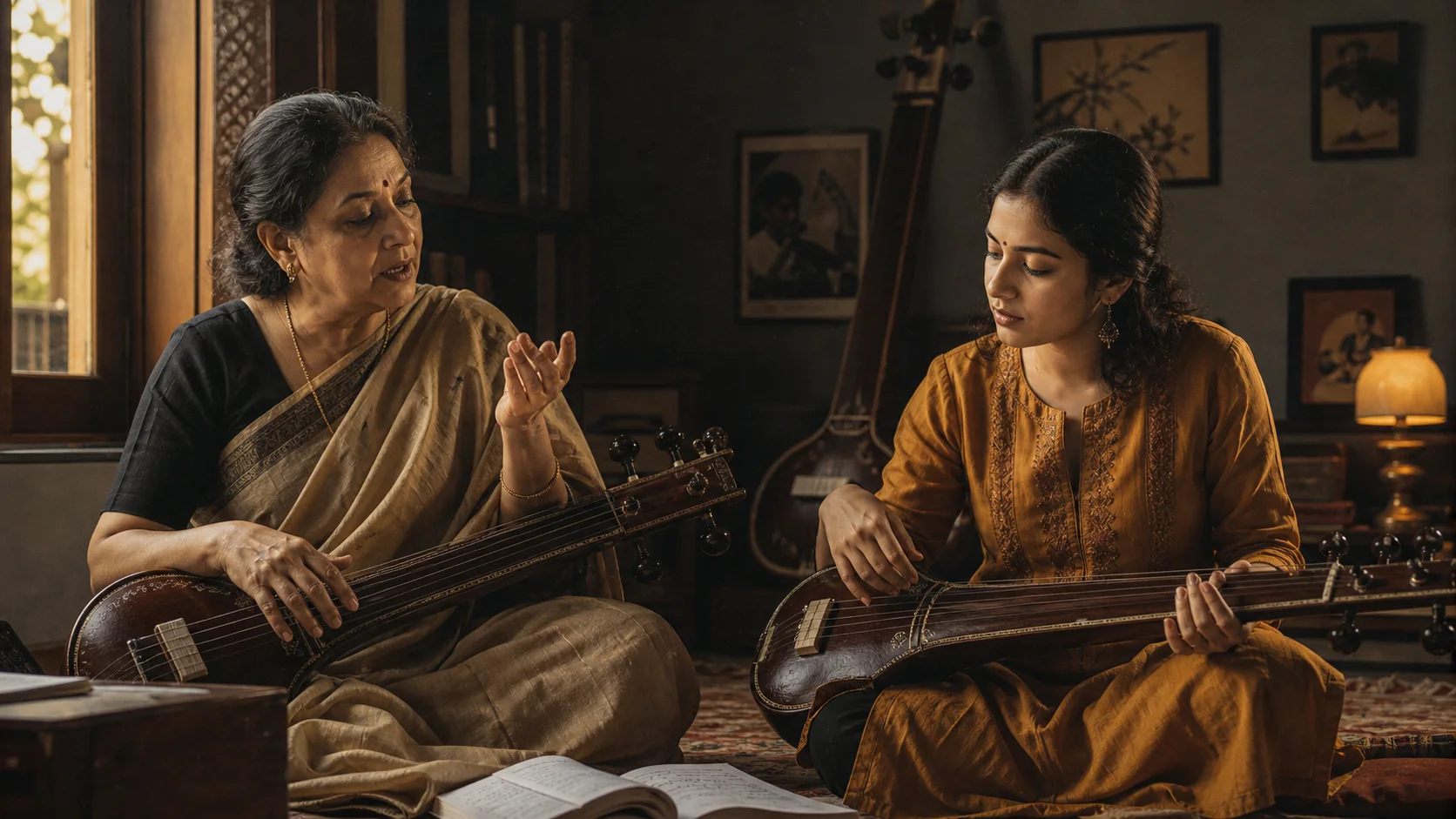
A guru teaches a phrase and then gives an instruction that seems to undo the lesson: do not copy me. Pt. Swapan Chaudhuri remembers being told that the material had to be learned, but its final form had to become his own. The reason was exact. If the student copied what the teacher played today, he would remain fixed there while the teacher’s own thought moved elsewhere tomorrow.
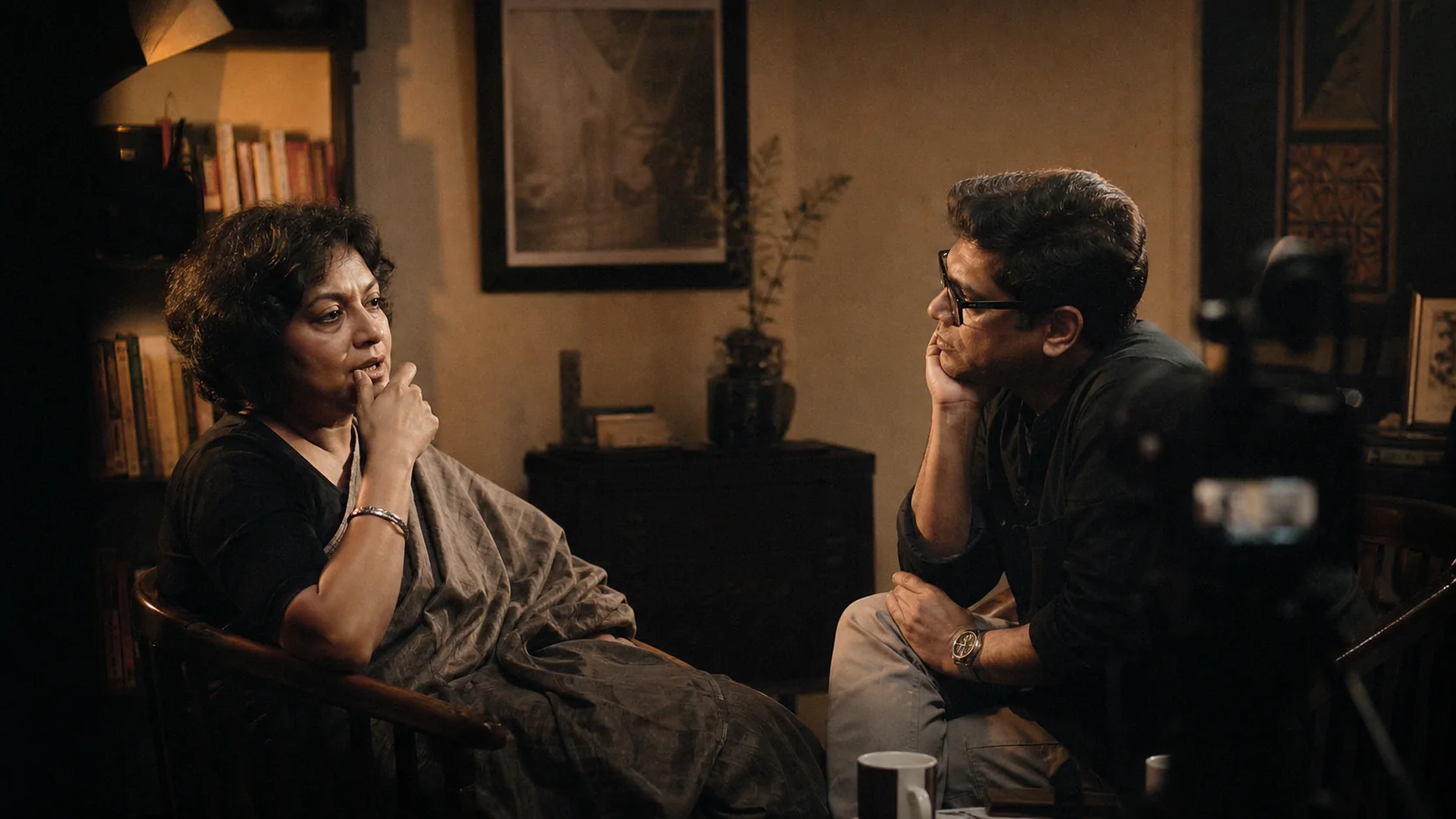
That exchange is the living centre of Arunava Khasnobis’s two-hour Soul Connection conversation with the tabla maestro. It complicates two easy stories. Tradition is not a mould that produces identical musicians. Originality is not a sudden act of self-expression performed before grammar has entered the body. Between those ideas lies a slower task: years of attention so deep that inheritance becomes judgment rather than mannerism. The human stake reaches beyond music. Every student, apprentice, actor, writer or filmmaker eventually faces it. How do I receive what another person knows without renting that person’s identity?
Three quiet tasks behind an original voice
Absorb touch, rhythm, vocabulary and discipline before demanding the appearance of originality.
In accompaniment, do not arrive with a display prepared; hear the music that is forming in front of you.
Pass inherited material through your own body, temperament and judgment.
A large joint family and a conditional permission to make music
Swapan grew up in a south Kolkata household where medicine, science, literature, theatre and music occupied the same verandah. The family admired culture, yet remained wary of the life of a professional musician. His mother had recorded a song under Kazi Nazrul Islam’s supervision before marriage, but was asked to stop performing outside afterwards. The contradiction is familiar even now: art is honoured as refinement while the artist’s working life is treated as a risk.
When he was five, the family allowed formal tabla lessons on a condition. If his school results fell, the music would stop. His guru had initially shared the worry because the family had no professional musicians. The condition placed pressure on a child, but it also made his interest a visible family matter rather than a secret indulgence. His father then enforced both sides of the agreement. Academic work had to continue, and so did daily practice.
The econometrics story shows the arrangement at its most human. The night before an examination, Swapan was stuck and tense. His father returned from hospital and asked whether he had practised. Swapan objected that music was not going to be his career. He was still sent to play for an hour. When he returned, the problems appeared manageable. This is his memory, not a universal therapeutic claim. Its value lies in the pattern: a familiar embodied discipline interrupted panic and returned attention to the work waiting on the desk.
Seven days, four hours and an answer delayed for a year
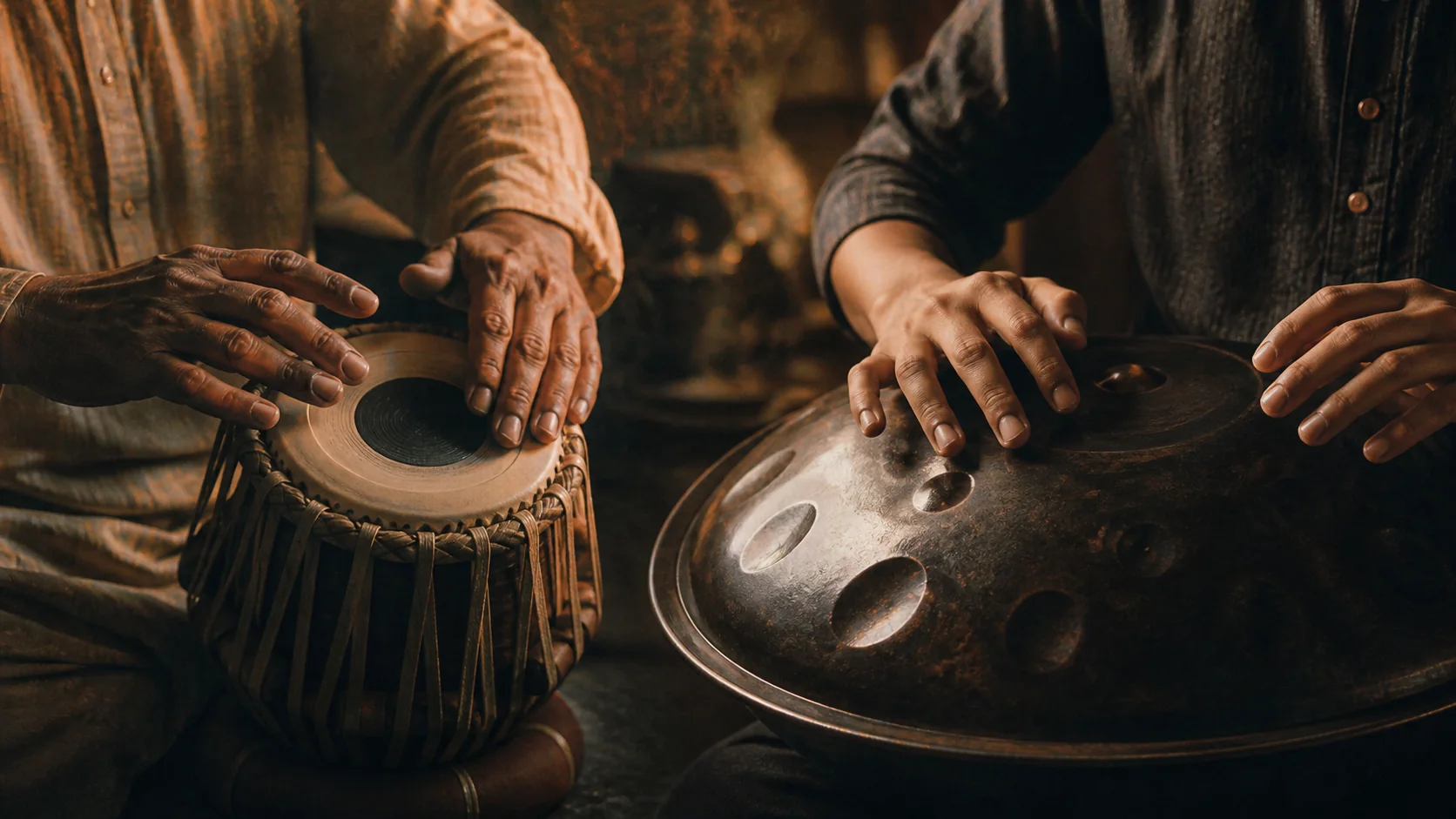
Swapan’s guru was not a professional performer. He held a senior post at the Reserve Bank and pursued tabla with extraordinary seriousness. Teaching took place seven days a week, often for at least four hours and longer on weekends. The child sometimes watched his brothers play while he remained with the instrument. Love did not precede every hour of discipline. The deep attachment to tabla arrived later, after achievement, uncertainty and repetition had changed obligation into need.
The teacher could refuse explanation. When Swapan once asked why a movement had to be done in a particular way, he was told to do it and discover the answer a year later. Swapan says the answer often did arrive through work. This is a real feature of embodied knowledge. Pressure, balance, timing and the smallest subdivisions between beats can be understood by the hand before explanatory language becomes adequate. An immediate lecture may supply information without changing perception.
Yet delayed explanation must never become a universal defence of authority. In a relationship built on care, context and close observation, silence may protect discovery. In another room, the same instruction can conceal incompetence, humiliation or abuse. Swapan’s later experience with Western students is instructive. Their culture required questions. He initially resisted, then learned to understand the source of the question and explain his process. The lineage did not collapse when it became answerable. It gained another route of transmission.
Accompaniment begins by postponing your prepared sentence
On 13 December 1969, Ustad Ali Akbar Khan insisted that the young Swapan accompany him at the Tansen Music Conference even though the tabla player lacked the expected radio grade. The performance brought immediate attention from other major musicians. When the concert season ended, however, Swapan discovered that the deadline for returning to advanced economics study had passed. Music stopped being an exciting sequence of travel, hotels and applause. It became the open road, and practice began to grow from internal necessity.
Ali Akbar Khan gave him a way to understand rhythm beyond counting. A taal has divisions, stresses and movement; counting alone can flatten it into a line of equal units. Between one and two lie smaller sensations that must be felt. The lesson becomes especially important in accompaniment. If the tabla player counts a prepared tihai while the instrumentalist is developing an alaap, he may reach the correct beat and still miss the music. Hearing the direction of the other person’s thought must precede deciding what to add.
This does not require the accompanist to erase his identity. Swapan’s own sound had to be distinct for such different musicians to seek him out. His individuality worked inside relationship. Two complete musical minds could create a third event that neither had fully prepared. Listening did not reduce the ego to nothing; it gave the ego a better task. The question changed from “What can I display?” to “What does this music need from me now?” That question also separates collaboration from polite parallel performance. The artist is not merely waiting for an opening. He is allowing what he hears to alter the response he had imagined.
Four-hour lessons that prepare a student for independence
Swapan’s account begins far from professional ambition. He grew up in a large joint family in south Kolkata. Music was loved in the household, but a career in it was uncertain and socially suspect. His mother had recorded under Kazi Nazrul Islam’s supervision before marriage, then stopped performing outside after entering a conservative family. His father was a doctor with interests in football, theatre and composition. At five, Swapan was accepted by the man who would remain his guru, although the teacher initially worried that serious music might damage the child’s studies.
The family eventually set a condition: tabla could continue only while school results remained strong. Years later, on the eve of a difficult econometrics examination, Swapan’s father entered his room and asked whether he had practised. The son protested that music would not be his career. His father still sent him to the tabla. After an hour, Swapan returned to the mathematical problems and found the tension had loosened. In his telling, discipline was not the enemy of study; it restored the attention required for it.
Moving forward with the guru’s ear, not the guru’s mannerisms
It is tempting to use this story as a command to every distracted student. That would miss its conditions. Swapan had a father who was watching his anxiety, a teacher who knew his habits and a long relationship in which correction had context. A ritual helps when it gathers the mind. It harms when obedience becomes an instrument for fear or domination. The useful principle is not that one must practise regardless of circumstance. It is that a durable craft can become a place where scattered attention returns to the body. For a writer it may be reading a page aloud; for an actor, walking the scene without a camera; for a musician, entering a slow cycle before attempting speed. The action is small, familiar and private. Its purpose is not productivity theatre. It is to make perception available again.
By the end of the episode, lineage no longer looks like the preservation of a master’s surface. It is the transmission of an ear. Swapan’s guru did not ask him to become a smaller copy. He trained him to recognise structure, to stay with difficulty, to hear another musician, and eventually to move forward without waiting for praise. An original voice is not proof that no one taught you. It may be the clearest proof that teaching went deep enough to disappear from imitation and remain inside choice. The teacher may no longer be audible in a borrowed phrase, yet remain present in the student’s refusal to rush, in the room left for a collaborator, and in the courage to revise an inherited answer.
Specific takeaways
- 01
Learn the reference accurately, then separate its underlying grammar from the surface you are copying.
- 02
Give each practice session one technical goal and one listening goal.
- 03
In accompaniment or collaboration, hear the other person’s emerging work before presenting prepared material.
- 04
Choose a teacher for attention, precise feedback and ethical boundaries, not fame alone.
- 05
Do not change mentors whenever learning becomes difficult, but never rename harm or neglect as loyalty.
- 06
Do not treat speed as proof of feeling; test whether the idea survives at a slower tempo.
- 07
Ask safety and clarity questions immediately; let some embodied questions develop through practice and return to them.
- 08
Instead of announcing an original voice, keep a record of why you made each creative decision.
Questions for your own life
- Which part of your work is still a surface copy of a teacher you admire?
- In your last collaboration, did you hear the other person or wait to deliver your prepared contribution?
- Is your mentor gradually making you more independent, or more dependent?
- Which difficult question needs an answer now, and which one can be investigated through practice?
- Is your originality visible in style, or in the quality of your decisions?
His guru said, “Do not copy me.” So how does a student find a voice of his own?
Watch the complete episode ↗
Arunava Khasnobis
In Soul Connection, Arunava looks at people, art, relationships, failure, moral tension and inner life through conversation. His essays are not episode summaries; they are honest returns to what was heard, tested against his own questions, experience and unfinished understanding.
CONTINUE READING