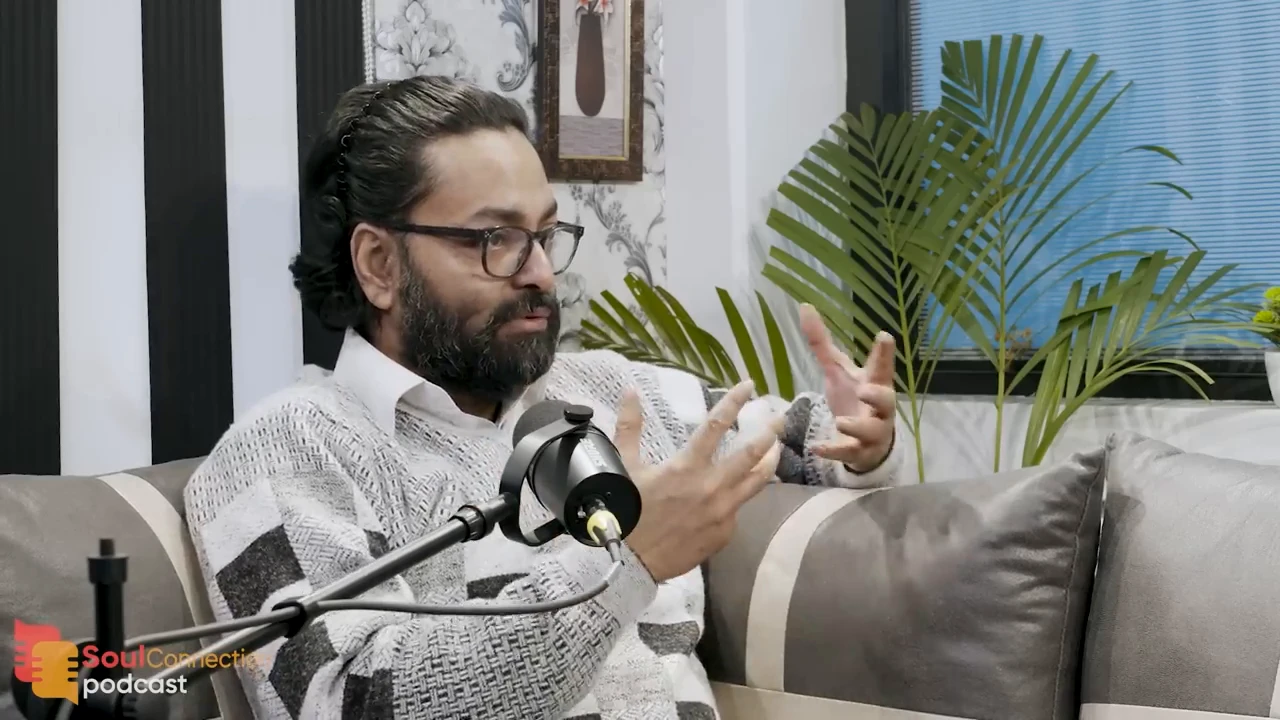
Soul Connection · cinema-craft
You recognise Swastika. Does that mean she owes you an explanation?
Recognising a face can feel like knowing a life. Swastika’s published reflections help separate fair criticism from the belief that a familiar person owes us unlimited access.

A familiar face in the comment box
The comment box is open. Above it is a photograph of a face you recognise. Someone wants to know why she looks so cheerful. Another person has an opinion about what she is wearing. Imagine pausing before adding your own response. What, exactly, has this photograph given you permission to judge? A familiar face can make that question surprisingly difficult. Recognition feels like a relationship, and the relationship begins to feel like a claim.
Swastika Mukherjee’s Soul Connection appearance is the occasion for this essay, not a claim that every detail of her life has been established. The factual starting points here are separate published sources. In Kasturi Kundu’s Indian Express Bangla interview of 10 January 2025, Swastika resists presenting herself only through a glamorous exterior and acknowledges the workers behind a polished photograph. Her position invites a question about spectatorship: can we assess someone’s work without expecting her whole life to satisfy us? The argument that follows belongs to this essay; it should not be read as additional testimony from her.
What are we entitled to ask?
Question its consequences and supporting evidence.
Listen without making it the only possible account.
Recognition does not confer unlimited access.
The unpolished photograph can become another test
There can be relief in seeing an actor look tired or ordinary. A face need not remain permanently ready for a publicity shoot. Yet that relief can harden into a new demand: this appearance is authentic, so the carefully styled one must be false. The person has escaped one requirement only to inherit another. Instead of having to look immaculate, she now has to demonstrate that she does not care about looking immaculate.
Appearance cannot carry that much evidence. Dressing up can be work, pleasure or both. Not dressing up may be a choice without a manifesto attached. The existence of one photograph does not invalidate another. A person who enjoys elaborate clothes on Saturday has not necessarily betrayed the person photographed in an old shirt on Friday. We can discuss how an image was made without treating its surface as a reliable measurement of character.
The sceptical viewer has a point, too. An apparently casual picture can be selected just as carefully as a formal portrait. The answer is not to abandon doubt but to keep its scale proportionate. We have seen a chosen image. We may have heard an account of what it means to its subject. Neither gives us unrestricted knowledge of her life. An affectionate audience can forget this as easily as a hostile one. Making a favourite performer perfectly genuine prepares the ground for accusing her of betrayal when she later behaves differently. What promise did she actually make, and what promise did we supply for her?

Work does not cancel every other part of a person
In a piece published under her own byline by Anandabazar Online on 21 September 2024, Swastika distinguishes promoting a film as an actor from participating in protest as a person. She also objects to attacks directed at women’s bodies. The distinction is useful without becoming a blanket defence of anything a public figure might do. It asks whether we require someone’s other responsibilities to disappear before accepting that a concern matters to her.
Consider an ordinary worker who is distressed by an event but still attends a shift the next morning. During a break, a colleague makes her laugh. A photograph of that laugh would not establish that the earlier distress was invented. Feelings do not hold the body in a single expression all day. People work, respond to others and occasionally find relief. Demanding an uninterrupted visual performance of sorrow can tell us more about our expectations than about the person being watched.
Publicity and sincerity can nevertheless conflict. A person might exploit a cause for attention, and an audience is entitled to examine evidence of that. The difficulty is proving the connection rather than assuming it. Two activities occurring near each other do not, by themselves, establish the motive behind either. What action is being criticised? What consequence followed? What information connects them? These questions preserve the possibility of criticism while refusing to treat a photograph as a complete explanation.
A public platform brings responsibilities because statements can reach and affect other people. That does not mean the audience gets to prescribe how long someone must look unhappy. Asking for accuracy is different from demanding a recognisable expression of virtue. The first can improve public discussion. The second can reward those who are best at presenting the expected face.
A direct account is an opening, not a final verdict
When someone answers a report on her own page, readers gain access to a response that might otherwise have been difficult to hear. It may correct an error or supply missing context. That is valuable. But directness does not remove the limits of a personal account. Another participant may remember the exchange differently. Documents may complicate both versions. Giving a speaker room to explain herself should not require everyone else to leave the room.
For an admirer, this creates an uncomfortable test. Would the same explanation seem adequate if it came from someone we disliked? Do we grant our favourite person uncertainty while interpreting another person’s hesitation as proof of guilt? Preference can quietly organise the evidence before we notice it. We begin searching not to find out what happened but to keep our first judgment intact.
One useful discipline is to separate the reported event, the material offered in support of it and the interpretation attached to it. An explanation can sound plausible while the evidence remains incomplete. At that point, withholding a verdict is not an abdication. Most readers are not required to deliver an immediate judgment on every dispute that reaches their screen. Saying that we do not yet know leaves space for information rather than filling it with allegiance.
Nor does a personal publishing channel make reporting unnecessary. Speaking directly and examining a claim are different functions. Good questions can test an account without humiliating its subject. Listening to a response need not commit us to believing it unconditionally. The difficult position is to maintain both commitments: people should be able to describe their own lives, and public claims should remain open to evidence-based challenge. Neither demand needs to erase the other.
Privacy is not immunity from a relevant question
There is a real objection to all this talk about boundaries. Private choices sometimes affect colleagues, dependants or people with less power. Calling something personal cannot automatically remove it from scrutiny. If an allegation concerns workplace behaviour, the conditions of work and the accounts of those involved matter. So may documents, dates and an opportunity to respond. The question is not whether the person enjoys privacy in the abstract. It is whether the information being sought helps establish the specific matter under examination.
Clothes, age and relationship gossip cannot settle an unrelated allegation. Nor can admiration for a performance disprove it. A refusal to disclose a child’s routine is different from evading a relevant question about a public commitment. Both may look like silence from the outside, but they do not carry the same meaning. We also need to ask whose account can travel. A well-known actor may have a substantial audience; an unfamiliar worker may not. Respect for the former’s boundaries must not become a reason to neglect the latter’s evidence. Fairness requires restraint and attention, not simply a warmer attitude towards the person we already recognise.
Before you press send
A practical place to start is the sentence waiting in the comment box. Does it identify a statement you disagree with, or does it try to make the speaker feel unfit to speak? Does it explain an action’s consequences, or substitute a joke about her body? Removing the irrelevant material often produces a more demanding question, not a softer one. It gives the other person something specific to answer and leaves readers a clearer basis for deciding whether the answer is adequate. If all that remains is dislike, it is possible to dislike someone without manufacturing an allegation.
This habit matters beyond actors. A friend known for being cheerful may have a miserable week. A direct colleague may not want to explain a family difficulty. The person who usually takes responsibility may need a rest. Familiarity gives us a history with them, but not a complete report on their present condition. The photograph is still on the screen. We still recognise its subject. What remains outside the frame has not become ours merely because we can imagine it. Can we keep an opinion about her work while leaving that unknown space intact? That is a harder relationship to sustain than either devotion or contempt. It asks us to stay interested without pretending we have finished knowing the person.
Specific takeaways
- 01
Separate what a published image establishes from what you have supplied through inference.
- 02
Do not turn either styling or its absence into a test of personal honesty.
- 03
Ask for evidence before treating professional work as proof that civic concern was insincere.
- 04
Distinguish a direct account’s factual claim, supporting material and interpretation.
- 05
Apply the same evidentiary standard to people you admire and people you dislike.
- 06
Keep criticism relevant to the allegation rather than a person’s body or unrelated relationships.
- 07
Respect boundaries while actively attending to people with less power to make themselves heard.
Questions for your own life
- What have you inferred about a familiar person from an image that cannot establish it?
- Would you accept the same explanation from a performer you disliked?
- Would the answer to your question clarify the issue, or merely satisfy personal curiosity?
- Whose account travels easily in this discussion, and whose requires effort to hear?
You recognise Swastika. Does that mean she owes you an explanation?
Watch the complete episode ↗
Arunava Khasnobis
In Soul Connection, Arunava looks at people, art, relationships, failure, moral tension and inner life through conversation. His essays are not episode summaries; they are honest returns to what was heard, tested against his own questions, experience and unfinished understanding.
CONTINUE READING