
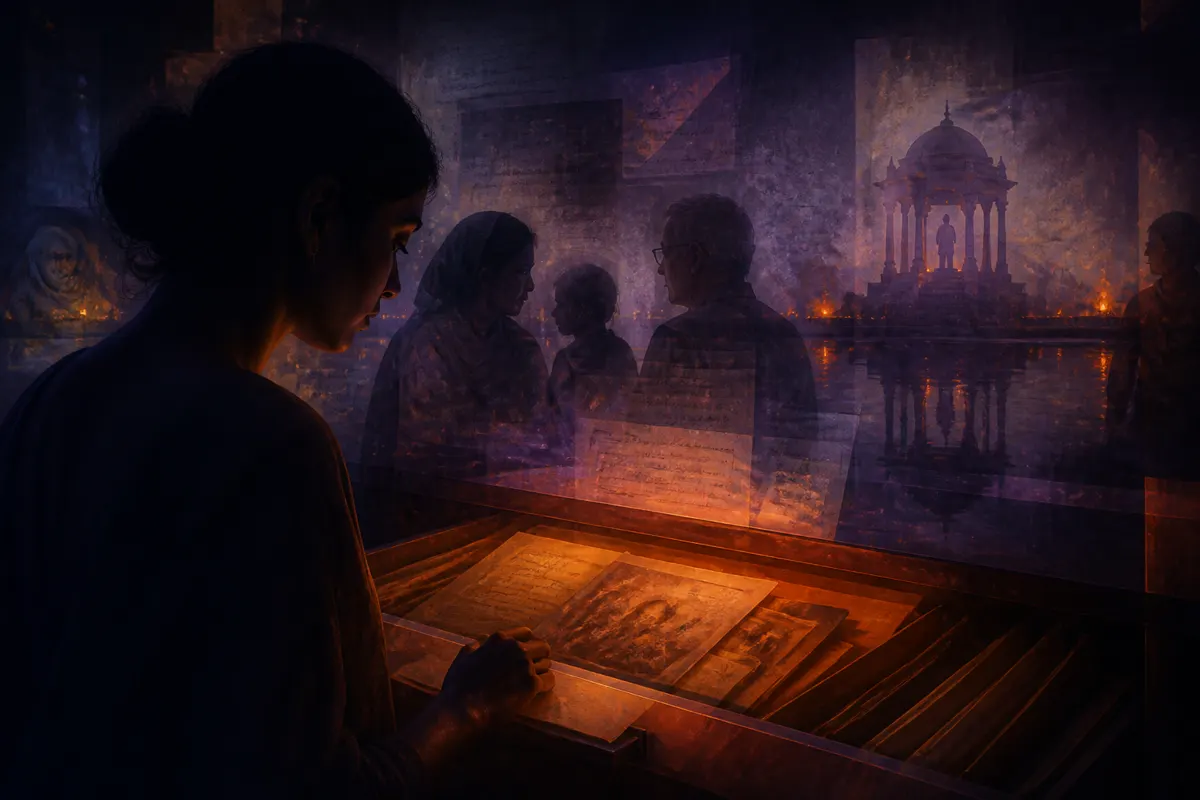
A short map of collective memory through personal recollection, public archives, folklore and political selection.
AT A GLANCE
“The aim is not to memorise an answer, but to learn how to see the question more clearly.”
Memory and history are not the same
Memory changes through lived experience, emotion and reconstruction. History tries to examine the past through evidence, comparison and interpretation. Their tension helps a society understand itself.
What gets preserved?
Official documents, newspapers, photographs, private letters and oral testimony do not survive equally. A voice excluded from the archive can disappear from public memory as well. Absence is therefore meaningful evidence.
Remembering happens in the present
Monuments, textbooks, anniversaries and popular cinema do not merely repeat the past; they frame it for present needs. Ask who is speaking, to whom, and what has been left out.
FROM THE CONVERSATION
Listen, watch and think further
Opening historical questions through a reference text
Premasis Mukherjee and Arunava Khasnobis use a reference book to open questions about Bengal’s history. This is labelled as interpretation, not the only final account.
Premasis Mukherjee ও Arunava KhasnobisWatch the full conversation ↗READ FURTHER
More doors into this question
Books, essays and conversations that can carry the question further.
OPENBoiThek · Bengal’s History Revisited · Episode 64Primary conversation↗OPENUNESCO — Memory of the WorldInstitutional source↗OPENOral History Association — Principles and Best PracticesProfessional guidance↗