
BOITHEK · Memory · Ageing · Desire · Decisions
Thinking, Fast and Slow — Daniel Kahneman
A long-form reading shaped from Premasis Mukherjee's BoiThek conversation on Thinking, Fast and Slow — Daniel Kahneman, placing its history, central argument and present-day significance in a clear critical frame.
- WRITING & READING
- Premasis Mukherjee
- PUBLISHED
- 7 November 2025
- BOOK / SUBJECT
- Thinking, Fast and Slow — Daniel Kahneman
- VIDEO DURATION
- 1h 16m
Watch before—or while—you read
YouTube ↗AN ORIGINAL ESSAY SHAPED FROM THE VIDEO CONVERSATION
Thinking, Fast and Slow — Daniel Kahneman
Opening the question
The conversation begins with Thinking, Fast and Slow — Daniel Kahneman, but refuses to treat its headline as a verdict. Instead, it asks which familiar assumption has made the question appear simple, where that assumption came from, and what changes once lived experience and institutional power enter the frame. The result is not a yes-or-no debate, but an inquiry into the relationship between people, history and the systems that shape both.
History and context
Childhood, ageing, happiness, desire, decision-making, Freud and the human capacity for cooperation. Seen within this wider history, Thinking, Fast and Slow — Daniel Kahneman becomes part of a longer chain of institutions, social habits and shifts in power rather than an isolated event or idea. That historical lens moves the discussion beyond immediate opinion and towards questions of cause, continuity and change.
The central argument
“Thinking, Fast and Slow — Daniel Kahneman” is used as an opening rather than a final authority. Premasis Mukherjee places the argument beside social experience and institutional reality, showing how apparently personal choices are often shaped by policy, inherited structures and a much longer history.
Tensions and complications
The discussion becomes most useful when the first explanation stops being sufficient. It asks whose experience has disappeared, which exception has been ignored, and what form of power is being made to look natural. Evidence, intention and consequence therefore have to be examined separately before the essay can arrive at any defensible position.
Returning to the present
Thinking, Fast and Slow — Daniel Kahneman does not remain in the past or on the page. It returns through present-day choices, identities and relationships, where a quick judgement can conceal more than it reveals. The lasting value of the conversation is therefore not a ready-made answer, but a more exact way of asking the question and testing one's own position.
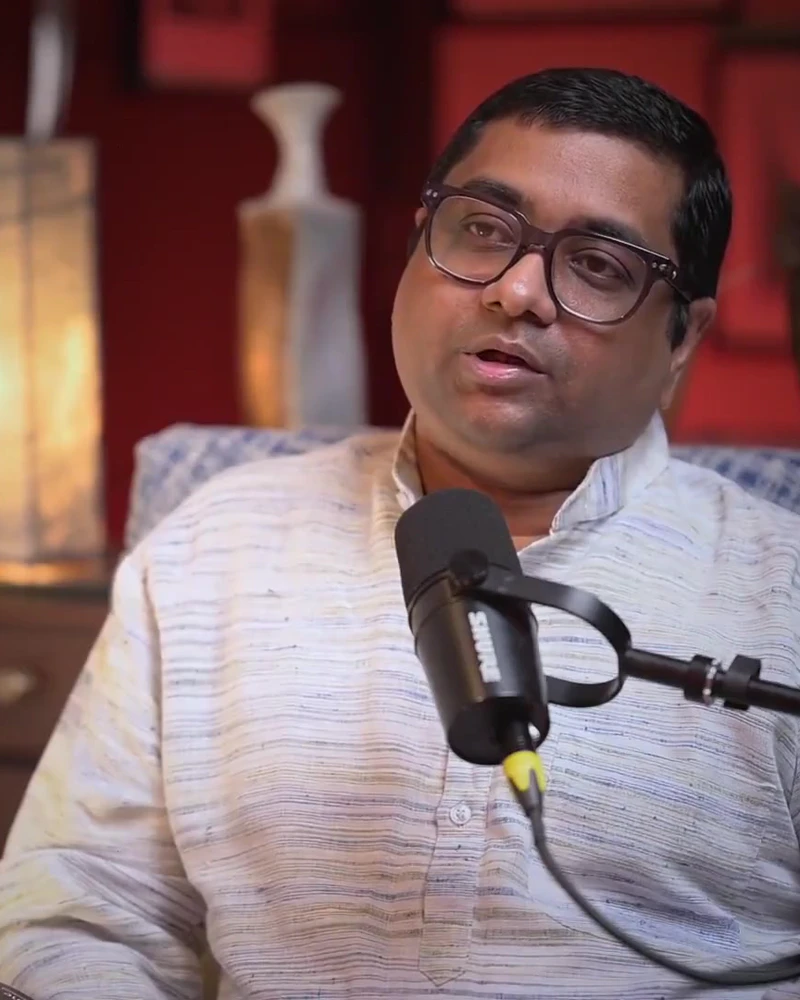
Premasis Mukherjee
The founding voice and editorial lead of BoiThek. Premasis reads a book not as the last word, but as a door into the larger questions of history, society, politics, philosophy and lived experience. These original long reads grow from his video conversations.
Books · History · Society · Philosophy